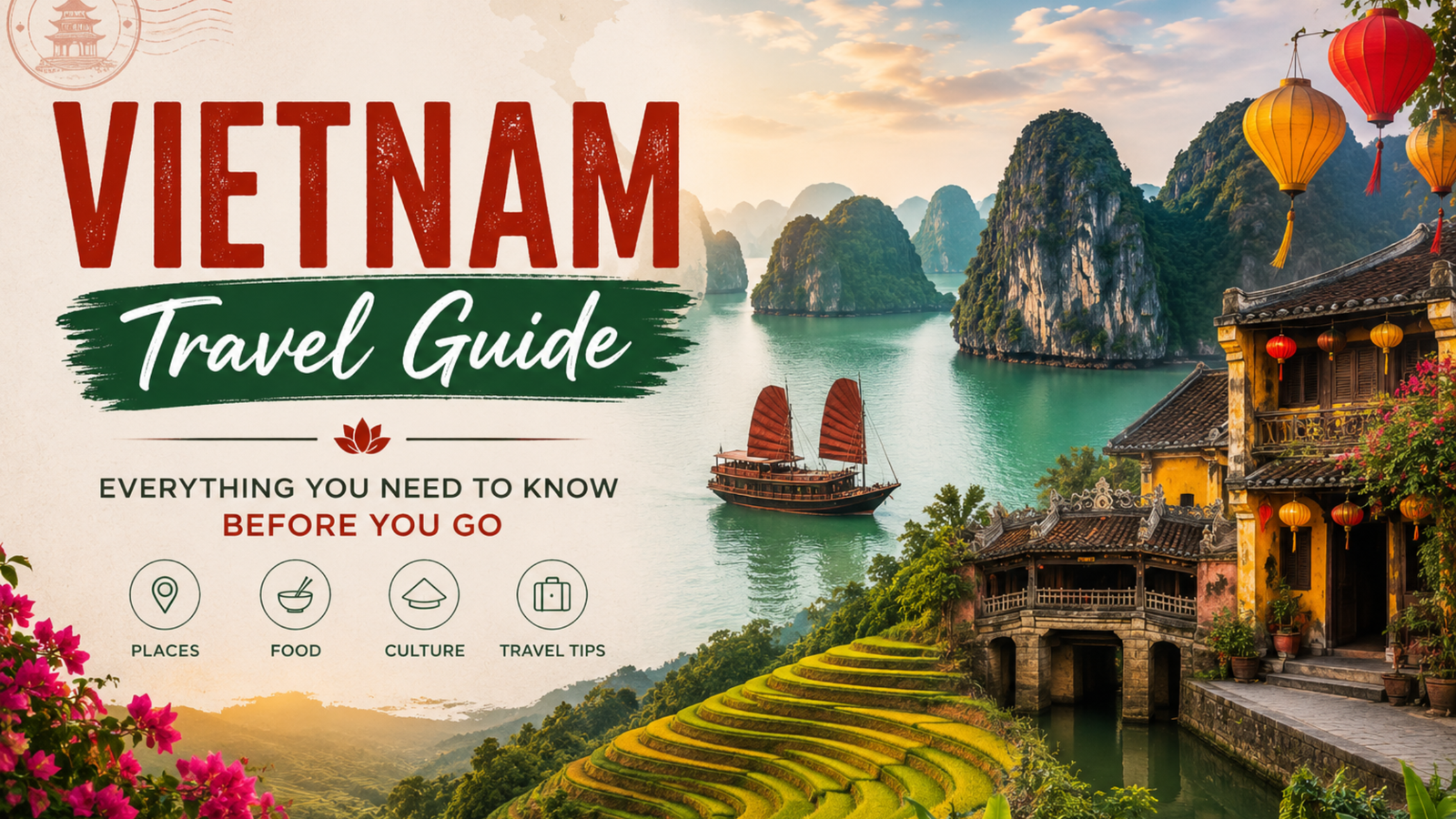
Vietnam is one of the most captivating and diverse travel destinations in Southeast Asia. A long, narrow country stretching over 1,600 kilometers from north to south, it packs extraordinary variety into a single nation: ancient cities, limestone karst seascapes, rice paddy highlands, tropical coastlines, world-class street food, and a history that spans thousands of years.
This complete Vietnam travel guide covers everything you need for successful Vietnam trip planning, from where to go and how to get around to budgeting and cultural etiquette, giving you the essential foundation for any first visit Vietnam trip.
Why Visit Vietnam
Vietnam tourism has grown dramatically over the past two decades, and the country has emerged as one of the most compelling destinations in Southeast Asia for travelers of every style and budget. The combination of extraordinary natural beauty, deeply layered culture and history, an incredibly diverse food scene, and excellent value for money makes Vietnam for beginners a particularly rewarding choice for those new to the region.
The country’s diverse geography means that a single Vietnam trip planning itinerary can take you from the misty mountains of Sapa in the north to the ancient lantern-lit streets of Hoi An in the centre to the Mekong Delta’s waterways in the south, all within a reasonable trip length.
Best Vietnam Destinations
Hanoi
Vietnam’s capital is a city of lakes, French colonial architecture, ancient temples, and one of the most vibrant street food scenes in the country. The Old Quarter’s 36 guild streets offer an unparalleled glimpse into traditional Vietnamese urban life, while the Ho Chi Minh Mausoleum, Temple of Literature, and Hoan Kiem Lake provide rich historical and cultural depth.
Ha Long Bay
UNESCO-listed Ha Long Bay is Vietnam’s most internationally famous natural landmark, featuring over 1,600 limestone islands and islets rising dramatically from the Gulf of Tonkin. An overnight cruise through the bay is one of the most iconic experiences in Southeast Asian travel and an essential inclusion in any best Vietnam itinerary.
Hoi An
The ancient trading port of Hoi An, with its beautifully preserved yellow-walled merchant houses, atmospheric lantern-lit evenings, and superb tailor shops and restaurants, consistently ranks as one of the most beloved towns in all of Vietnam. Hoi An’s UNESCO-recognized Ancient Town is the most visited historic district in the country.
Ho Chi Minh City (Saigon)
Vietnam’s largest city is an electric, forward-looking metropolis balancing its complex wartime history (visible through the War Remnants Museum and Cu Chi Tunnels) with a buzzing modern food, nightlife, and cafe scene.
Hue
The former imperial capital offers extraordinary royal architecture including the Imperial Citadel, royal tombs, and some of Vietnam’s most refined regional cuisine.
Sapa
The misty northern highlands around Sapa are home to spectacular terraced rice fields and diverse ethnic minority communities, offering some of the most rewarding trekking experiences in Southeast Asia.
Da Nang and Da Nang Beaches
Vietnam’s third largest city serves as a gateway to My Son Sanctuary, Hoi An, and the Marble Mountains, while its own beaches and modern amenities make it an increasingly popular destination in its own right.
How Long Do You Need
A minimum of 10 days allows for a focused Vietnam trip planning itinerary covering either the north (Hanoi, Ha Long Bay) or the centre and south (Hoi An, Ho Chi Minh City). Two weeks allows for a complete north to south journey that is the most satisfying way to experience the country’s full range. Three weeks or more allows for deeper exploration including Sapa, Hue, and the Mekong Delta.
Getting Around Vietnam
Domestic flights are the most efficient way to cover Vietnam’s considerable north to south distance, with Air Vietnam, VietJet, and Bamboo Airways offering frequent and affordable connections between Hanoi, Da Nang, and Ho Chi Minh City (typically $20 to $70 one way).
The Open Bus network connects major tourist destinations by coach, offering affordable but slower inter-city travel popular with budget backpackers. Overnight sleeper buses save accommodation costs on longer routes. The Reunification Express train running the length of the country is a scenic but slower alternative, particularly popular for the coastal stretches between Da Nang and Hue or Ho Chi Minh City.
Within cities, Grab is widely available for safe and affordable point-to-point transport. Scooter rental ($5 to $10 per day) offers maximum freedom in smaller cities and rural areas.
Money and Budgeting
The Vietnamese Dong (VND) is the local currency. Transactions typically involve large denominations (20,000 to 500,000 VND notes), which can be initially confusing for Vietnam for beginners. Always carry cash as many street food vendors, local markets, and smaller guesthouses are cash-only.
Budget travelers can manage comfortably on $25 to $40 per day. Mid-range travelers should budget $60 to $100 per day. Luxury travelers can expect $150 to $400 per day depending on accommodation choices.
Best Time to Visit Vietnam
Vietnam’s weather varies significantly by region due to the country’s length. Generally, February to April offers good conditions across most of the country, making it the most reliable period for comprehensive Vietnam trip planning. November to January is excellent for central and southern Vietnam but cold and misty in the far north. May to October brings the monsoon season to different regions at different times, with the southern and central coast most affected from September to November.
Cultural Etiquette for Vietnam Tourism
Vietnam is predominantly Buddhist and Confucian in its cultural values, emphasizing respect, modesty, and social harmony. Dress modestly when visiting temples and pagodas, covering shoulders and knees. Remove shoes before entering pagodas and many Vietnamese homes. Avoid public displays of affection, which remain uncommon in traditional settings. Bargaining is expected at markets but should be done with good humor rather than aggressive persistence.
Vietnam Travel Guide: Sample 2-Week Itinerary Overview
| Days | Destination | Focus |
|---|---|---|
| 1 to 3 | Hanoi | Old Quarter, Ho Hoan Kiem Lake, street food |
| 4 to 5 | Ha Long Bay | Overnight cruise |
| 6 to 7 | Hue | Imperial Citadel, royal tombs, Hue cuisine |
| 8 to 10 | Hoi An | Ancient Town, tailor shops, beaches |
| 11 to 12 | Da Nang | Marble Mountains, beaches |
| 13 to 14 | Ho Chi Minh City | War Remnants Museum, Cu Chi Tunnels |
Frequently Asked Questions
Q: Is Vietnam good for first-time Southeast Asia visitors?
Yes. Vietnam for beginners works extremely well due to excellent tourism infrastructure, English widely spoken in tourist areas, compelling mix of history and natural beauty, and outstanding value for money.
Q: How much does a Vietnam trip cost?
Budget travelers can manage $25 to $40 per day. Mid-range travelers should budget $60 to $100 per day. Vietnam remains one of the most affordable best Vietnam destinations in the region.
Q: Is Vietnam safe for tourists?
Yes, Vietnam is generally very safe for tourists. Standard travel precautions around petty theft and scooter traffic apply, but violent crime against tourists is rare.
Q: Do I need a visa to visit Vietnam?
Many nationalities receive a visa exemption for a set number of days. Others need to apply for an e-visa online before arrival. Always check current requirements for your specific nationality before your Vietnam trip planning.
Q: What is the best way to travel north to south in Vietnam?
A combination of domestic flights and local ground transport works best. Flying between Hanoi, Da Nang, and Ho Chi Minh City saves significant time, while local transport covers the shorter scenic stretches in between.