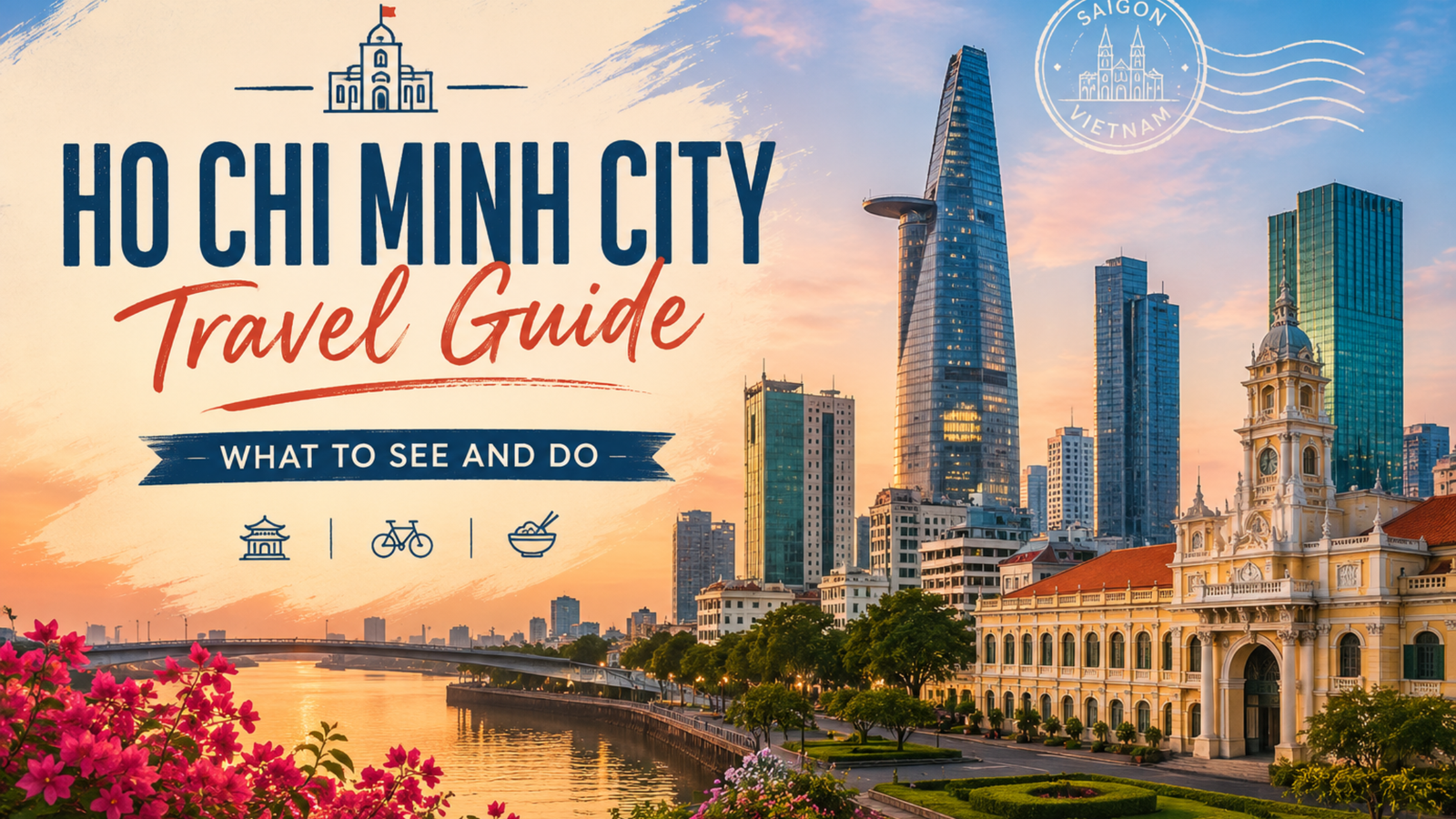
Ho Chi Minh City, still widely known by its former name Saigon, is Vietnam’s largest and most dynamic city. A place of relentless energy, fascinating wartime history, extraordinary street food, and a rapidly evolving modern culture, HCMC offers a travel experience that is simultaneously confronting, exhilarating, and deeply compelling.
This complete Ho Chi Minh City travel guide covers all the essential things to do Saigon offers, the top Ho Chi Minh tourism highlights, and practical tips to make your visit HCMC experience as rewarding as possible.
Why Visit Ho Chi Minh City
Ho Chi Minh tourism draws travelers from around the world for a combination of reasons. The city’s role in the Vietnam War makes it one of the most significant historical destinations in Southeast Asia. Its street food scene, centered around Ben Thanh Market and the chaotic lanes of District 1, is extraordinary. And the city’s rapidly developing restaurant, cafe, and nightlife culture makes it increasingly compelling even for travelers who have already explored the more historically oriented north.
Top Things to Do Saigon Offers
1. War Remnants Museum
The War Remnants Museum is the most visited and most emotionally powerful of all the things to do Saigon offers. The museum presents the Vietnam War from the Vietnamese perspective, with an extensive collection of photographs, military hardware, and documentation of the war’s impact on the Vietnamese civilian population. This is essential viewing for any visitor wanting to understand the history that shaped modern Vietnam, though be prepared for confronting material.
Entry fee: Approximately $2 per person Opening hours: 7:30 AM to 6 PM daily
2. Cu Chi Tunnels
Located approximately 40 kilometers northwest of the city center, the Cu Chi Tunnels are an extraordinary underground network built and used by the Viet Cong during the Vietnam War. Over 250 kilometers of tunnels served as living quarters, hospitals, command centers, and supply routes during the conflict. Guided tours allow visitors to crawl through sections of the tunnels and examine weapons, traps, and daily life artifacts from the wartime period.
The Cu Chi Tunnels are one of the most historically significant and physically engaging things to do Saigon travelers consistently rank as a highlight of their visit HCMC trip.
Entry fee: Approximately $8 to $12 per person Transport from HCMC: 1 to 1.5 hours by organized tour or private car
3. Notre-Dame Cathedral Basilica of Saigon
One of the most recognizable landmarks in the Ho Chi Minh City travel guide, the neo-Romanesque Notre-Dame Cathedral was built by French colonists between 1863 and 1880 using materials imported from France. The cathedral remains an active place of worship and a significant landmark visible from the surrounding streets of District 1.
4. Central Post Office
Directly across from the cathedral, Saigon Central Post Office is a stunning example of French colonial architecture designed by Gustave Eiffel and completed in 1891. The vaulted interior ceiling and original painted maps of Vietnam’s telegraph routes make this one of the most architecturally beautiful post offices in the world and an unusual but rewarding stop on any Saigon travel guide itinerary.
Entry fee: Free Opening hours: 7 AM to 7 PM daily
5. Ben Thanh Market
Ben Thanh Market is the most famous market in HCMC and one of the city’s enduring symbols. The indoor covered market is filled with clothing, handicrafts, spices, and an extensive food section offering a wide range of Vietnamese dishes. The surrounding streets transform into a night market after 6 PM, extending the experience into the evening.
6. Jade Emperor Pagoda
The Jade Emperor Pagoda (Phuoc Hai Tu) is one of the most atmospheric and beautifully ornate pagodas in the city, built by the Cantonese community in 1909 and dedicated to the Jade Emperor of Taoist cosmology. The dim, incense-filled interior filled with intricate carved figures offers a more intimate, less touristy experience than the major monuments, making it one of the most recommended hidden gems in this Ho Chi Minh City travel guide.
Entry fee: Free
7. Reunification Palace
The Reunification Palace served as the headquarters of the South Vietnamese government during the war and became famous worldwide when North Vietnamese tanks crashed through its gates on April 30, 1975, marking the end of the war. The palace has been preserved almost entirely as it was in 1975, including the original command bunkers, war rooms, and reception halls, creating a uniquely preserved time capsule of the wartime period.
Entry fee: Approximately $2 per person
8. Ho Chi Minh City Museum
The HCMC Museum offers a comprehensive overview of the city’s history from prehistoric times through the French colonial period and the Vietnam War to the present day, housed in a beautiful French colonial building in District 1.
9. Bui Vien Walking Street
Bui Vien is the most famous nightlife street in HCMC, a pedestrianized strip lined with bars, clubs, and street food stalls that comes alive every evening. This is the epicenter of backpacker nightlife in Saigon and one of the more energetic things to do Saigon offers after dark.
10. Mekong Delta Day Trip
The Mekong Delta, approximately 60 to 90 kilometers southwest of HCMC, offers an extraordinary contrast to the city: a vast network of rivers and canals where traditional floating markets, rice paddy views, and orchid gardens create a glimpse of rural Vietnamese life that feels completely removed from urban Saigon. My Tho and Can Tho are the most commonly visited gateway towns for Mekong Delta day trips from HCMC.
Best Areas to Stay in HCMC
District 1
The most central and tourist-oriented district, home to most major attractions, the best range of hotels and guesthouses, and easy access to street food and transport.
District 3
Slightly quieter than District 1, with excellent cafes and restaurants, more residential character, and easy access to the city’s attractions.
Bui Vien Area (District 1)
Best for budget travelers and backpackers wanting to be close to the main nightlife and social scene.
Ho Chi Minh City Travel Guide: Sample 3-Day Itinerary
| Day | Focus |
|---|---|
| Day 1 | War Remnants Museum, Notre-Dame Cathedral, Central Post Office, Ben Thanh Market |
| Day 2 | Cu Chi Tunnels day trip |
| Day 3 | Reunification Palace, Jade Emperor Pagoda, Mekong Delta half-day trip or Bui Vien evening |
Frequently Asked Questions
Q: Is Ho Chi Minh City called Saigon or HCMC?
Both names are widely used. The city was officially renamed Ho Chi Minh City in 1975 but remains commonly known as Saigon, particularly among locals and older generations. Both names are understood and acceptable in any visit HCMC context.
Q: How many days should I spend in Ho Chi Minh City?
2 to 3 days covers the essential Ho Chi Minh tourism highlights including the War Remnants Museum, Cu Chi Tunnels, and major historical landmarks, with time for street food and evening exploration.
Q: Are the Cu Chi Tunnels worth visiting?
Yes. The Cu Chi Tunnels are one of the most genuinely fascinating things to do Saigon travelers consistently highlight as a trip highlight, offering unique physical and historical insight into the Vietnam War.
Q: Is HCMC safe for tourists? Yes. HCMC is generally safe for tourists, with standard precautions around petty theft and motorbike traffic applying in busy areas like Ben Thanh Market and District 1.
Q: What is the best street food area in HCMC?
The streets surrounding Ben Thanh Market and the Bui Vien area in District 1 offer the most concentrated and diverse street food options among all things to do Saigon food lovers should explore.