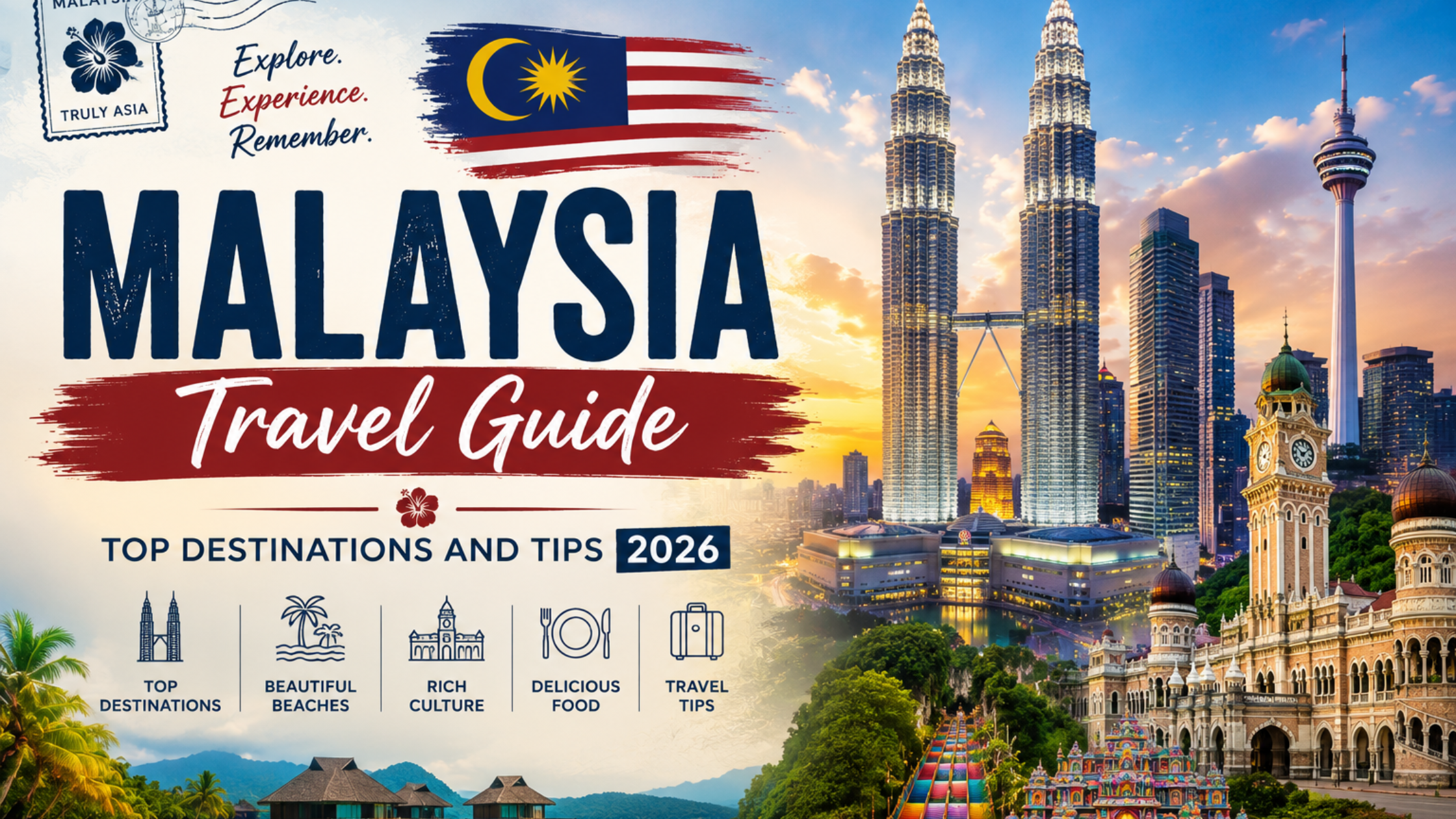
Malaysia is one of Southeast Asia’s most underrated and most diverse travel destinations, combining a modern cosmopolitan capital, ancient rainforests, pristine island beaches, extraordinary street food, and a cultural melting pot of Malay, Chinese, and Indian heritage that makes it unlike any of its neighbors.
This complete Malaysia travel guide covers the top destinations and essential Malaysia travel tips to help you plan a rewarding Malaysia trip in 2026.
Why Visit Malaysia
Malaysia tourism consistently rewards visitors with remarkable variety. In a single trip you can eat world-class street food in Penang’s George Town, explore one of the oldest rainforests on earth in Borneo, dive among the finest coral reefs in the world off the Perhentian Islands, and visit one of Southeast Asia’s most architecturally striking modern cities in Kuala Lumpur, all without ever leaving the country.
Malaysia is also one of the most linguistically accessible destinations in the region: English is widely spoken throughout the country, making navigation and communication significantly easier than in many other Southeast Asian destinations.
Best Places Malaysia Has to Offer
Kuala Lumpur
The Malaysian capital is one of the most impressive modern city skylines in Southeast Asia, dominated by the iconic Petronas Twin Towers. Beyond the towers, KL offers excellent street food, a diverse cultural heritage expressed through Little India, Chinatown, and the colonial British quarter, world-class shopping malls, and a vibrant nightlife scene.
Penang
George Town, Penang’s UNESCO World Heritage-listed capital, is one of the most celebrated food destinations in all of Asia, a city where Malay, Chinese, Indian, and Peranakan (Straits Chinese) culinary traditions have merged over centuries into one of the world’s great street food cultures. Penang’s vibrant street art scene and beautifully preserved colonial and shophouse architecture add additional layers to a deeply rewarding destination.
Langkawi
The Langkawi archipelago in the Andaman Sea offers some of Malaysia’s finest beach resort scenery, with cable car rides to mountain viewpoints, mangrove kayaking, and a duty-free shopping status that makes it popular with regional tourists. Langkawi is Malaysia’s premier beach holiday destination.
Borneo (Sabah and Sarawak)
Malaysian Borneo offers some of the most extraordinary natural experiences in Southeast Asia: orangutan sanctuaries, river expeditions into primary rainforest, diving at Sipadan (one of the world’s top dive sites), and encounters with traditional Dayak and Iban communities. Kota Kinabalu in Sabah is the most popular entry point.
Cameron Highlands
The cool, misty tea plantation highlands of Cameron Highlands in central Malaysia offer a refreshing escape from the lowland heat, with tea estate tours, strawberry farms, and jungle walks creating a distinctive highland atmosphere.
The Perhentian Islands and Tioman Island
Malaysia’s east coast islands, accessible during the dry season (March to October), offer some of the finest snorkeling and diving in Southeast Asia, with crystal clear turquoise water and well-preserved coral reefs.
How Long Do You Need in Malaysia
A minimum of 7 days allows a focused Malaysia trip covering Kuala Lumpur and either Penang or Langkawi. Two weeks allows for a more comprehensive itinerary including Borneo or the east coast islands. Three weeks or more enables deeper exploration of Malaysia’s extraordinary diversity, particularly if including Sarawak’s interior or the Cameron Highlands.
Getting Around Malaysia
Domestic flights connect Kuala Lumpur with Penang, Langkawi, Kota Kinabalu, and Kuching efficiently and affordably (typically $20 to $80 one way with AirAsia). The KTM rail network connects Kuala Lumpur with the Cameron Highlands and Penang by comfortable overnight and day trains. Within cities, Grab is the dominant ride-hailing service and the most practical Malaysia travel tip for urban transport.
Money and Budgeting
The Malaysian Ringgit (MYR) is the local currency. Malaysia sits at a comfortable mid-point in regional pricing, neither as cheap as Vietnam and Cambodia nor as expensive as Singapore. Budget travelers can manage on $30 to $50 per day, mid-range travelers should budget $70 to $120 per day, and luxury travelers can expect $150 to $400 per day depending on accommodation choices.
Cultural Etiquette for Malaysia Tourism
Malaysia is a predominantly Muslim country, and respecting Islamic customs is an important part of Malaysia travel tips. Dress modestly when visiting mosques (head coverings required for women) and in more conservative rural areas. Remove shoes before entering mosques and many private homes. Avoid public displays of affection, particularly outside urban tourist areas. During the holy month of Ramadan, be respectful of those who are fasting.
Malaysia Travel Guide: Sample 2-Week Itinerary
| Days | Destination | Focus |
|---|---|---|
| 1 to 3 | Kuala Lumpur | Petronas Towers, Chinatown, street food |
| 4 to 6 | Penang | George Town food, heritage streets |
| 7 to 9 | Langkawi | Beaches, cable car, mangroves |
| 10 to 14 | Borneo (Sabah) | Kinabalu Park, Sepilok orangutans, Sipadan diving |
Frequently Asked Questions
Q: Is Malaysia worth visiting?
Yes, absolutely. Malaysia is one of Southeast Asia’s most diverse and rewarding destinations, yet it remains less crowded than Thailand or Bali, making it excellent for travelers who want quality experiences without peak season crowds.
Q: Is Malaysia expensive to travel?
No. Malaysia is competitively priced compared to most international destinations, with budget travel achievable from $30 to $50 per day and mid-range travel comfortable at $70 to $120 per day.
Q: Do I need a visa to visit Malaysia?
Many nationalities can visit Malaysia visa-free for up to 30 to 90 days. Always check current requirements for your specific nationality before your Malaysia trip.
Q: What is the best time to visit Malaysia?
Malaysia’s west coast (Kuala Lumpur, Penang, Langkawi) is best from December to April. The east coast islands (Perhentian, Tioman) are best from March to October. Borneo has year-round accessibility with some seasonal variation by activity.
Q: Is English spoken in Malaysia?
Yes, widely. English is an official language of Malaysia and is spoken throughout the country, making it one of the most accessible Southeast Asian destinations for English-speaking travelers.