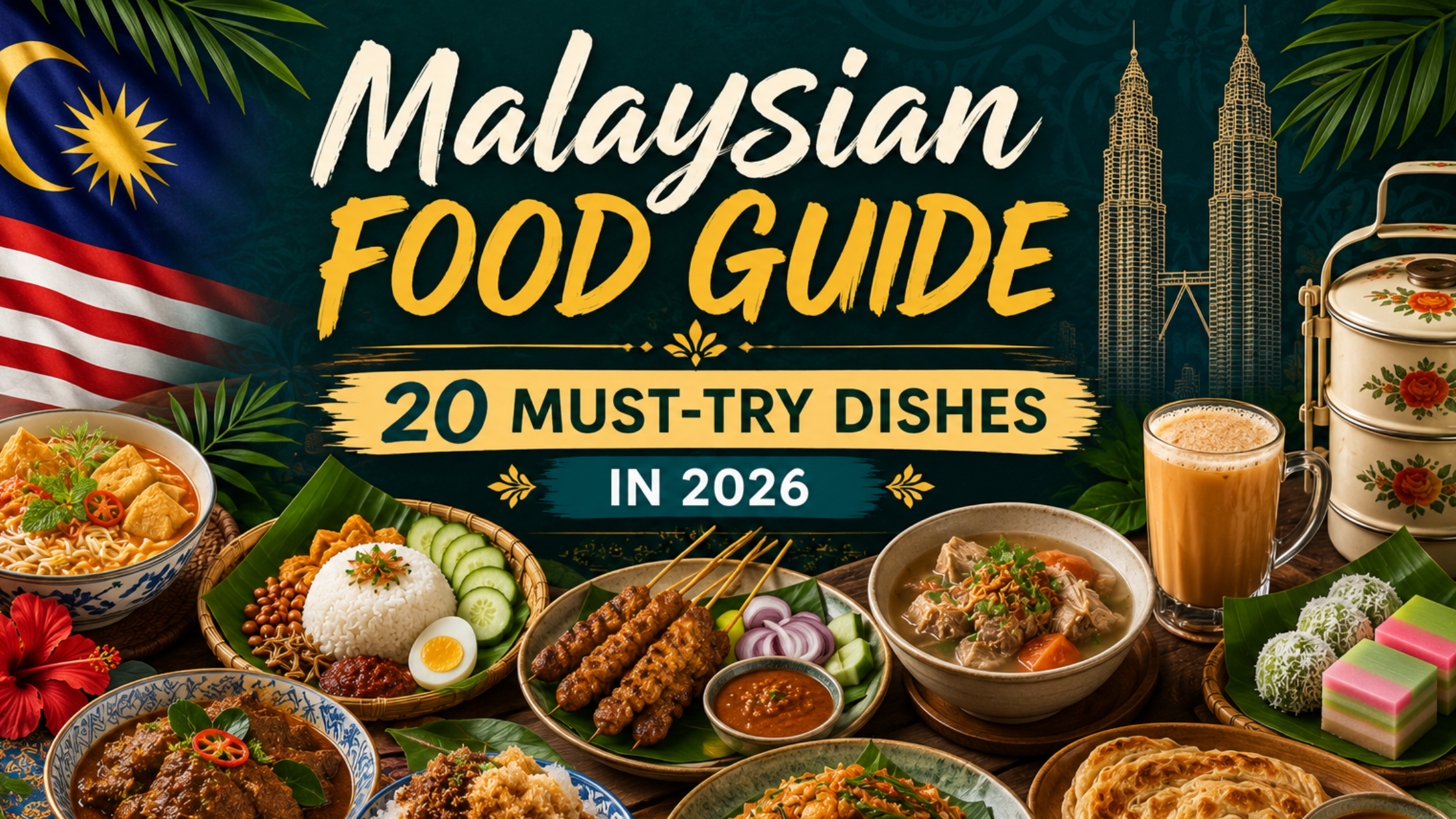
Malaysian cuisine is one of the most diverse and extraordinary food cultures in the world, a remarkable result of centuries of trade, migration, and cultural exchange between Malay, Chinese, Indian, Peranakan, and indigenous communities. From the national dish of Nasi Lemak to the iconic street food of Penang, from Indian mamak favorites to elaborate Peranakan banquet dishes, this complete Malaysian food guide covers 20 essential dishes that define what to eat in Malaysia.
1. Nasi Lemak
Nasi Lemak is the undisputed national dish of Malaysia, a fragrant coconut rice dish served with crispy fried anchovies, roasted peanuts, sliced cucumber, hard-boiled egg, and sambal (spicy chili paste), traditionally wrapped in banana leaf. While simple in its components, the quality of Nasi Lemak varies dramatically depending on the sambal and the rice, and great versions are worth going out of your way for.
Where to eat: Available at virtually every Malaysian food stall, hawker center, and mamak restaurant nationwide.
2. Char Kway Teow
The iconic Penang stir-fried flat noodle dish, Char Kway Teow is cooked at high heat with prawns, cockles, egg, lap cheong sausage, and bean sprouts in a smoky, slightly sweet dark soy sauce. The charcoal wok heat is essential to this Malaysian cuisine classic.
Where to eat: Penang, particularly Lorong Selamat for the most celebrated version.
3. Penang Assam Laksa
Thick rice noodles in a sour, tamarind-based mackerel broth garnished with pineapple, cucumber, mint, and prawn paste. One of the most distinctive and polarizing flavors in this Malaysian food guide.
Where to eat: Air Itam Market, Penang.
4. Roti Canai
A flaky, layered flatbread made by stretching and folding dough before cooking on a flat griddle, served with dhal curry or fish curry for dipping. Roti Canai is the most universally beloved mamak breakfast item in Malaysian cuisine.
Where to eat: Any mamak restaurant nationwide, available 24 hours.
5. Teh Tarik
Teh Tarik (pulled tea) is Malaysia’s national beverage, a sweet, creamy milk tea poured repeatedly between two containers to create a frothy top. More art than drink, watching a skilled mamak stall operator pull teh tarik is one of the most characteristically Malaysian food experiences available anywhere.
6. Nasi Kandar
A Tamil Muslim rice dish originating in Penang, Nasi Kandar features plain rice topped with multiple curries, gravies, and side dishes poured together to create a complex, layered flavor. Line Clear in Penang, open 24 hours, is the most famous address.
7. Satay
Marinated meat skewers grilled over charcoal and served with a thick peanut sauce, ketupat (compressed rice cake), and cucumber. While satay exists across Southeast Asia, the Malaysian version, particularly Kajang satay from the town of Kajang near KL, is considered among the finest.
8. Bak Kut Teh
A Chinese Malaysian pork rib soup simmered with aromatic herbs and spices, typically eaten for breakfast. The Klang valley style (richer, darker, more herb-forward) and Johor Bahru style differ significantly, giving this KL food guide entry regional variation.
Where to eat: Klang town (the original home), or any established Chinese coffeeshop in KL.
9. Hokkien Mee
Malaysian Hokkien Mee differs significantly between Penang (a prawn noodle soup) and KL (a thick dark soy stir-fried noodle dish with pork and seafood). Both are essential best Malaysian food experiences in their respective cities.
10. Cendol
Green pandan-flavored rice flour jelly strips in coconut milk and palm sugar syrup over shaved ice, often with kidney beans. Penang’s version, available at the famous Penang Road stall, is considered the finest in the country.
11. Rendang
A slow-cooked dry curry made with beef or chicken, coconut milk, and a complex spice paste, cooked for hours until the liquid evaporates and the meat becomes intensely flavored and tender. Beef Rendang is one of the most celebrated dishes in Malaysian cuisine, particularly around the festive season.
12. Mee Goreng Mamak
Indian Muslim-style fried yellow noodles cooked with tofu, potato, egg, and a spiced tomato-chili sauce. Mee Goreng Mamak is one of the most widely eaten and loved street food dishes in this Malaysian food guide, available at mamak restaurants 24 hours a day.
13. Laksa Lemak
The Malaysian coconut milk-based laksa, distinct from Penang’s sour Assam Laksa, features a rich creamy spiced broth over noodles with shrimp, tofu, and boiled egg. This version is common throughout the Klang Valley and represents a different dimension of Malaysian cuisine’s laksa tradition.
14. Nasi Goreng
Malaysian fried rice seasoned with belacan (shrimp paste), kecap manis (sweet soy), and various proteins and vegetables, typically served with a fried egg on top. The Malaysian version differs from Indonesian and Thai versions in its distinctive shrimp paste seasoning.
15. Rojak
A Malaysian fruit and vegetable salad dressed in a thick, dark fermented prawn paste and sugar sauce (Malay and Indian versions) or a sweeter sauce (Chinese Penang version), typically topped with crushed peanuts. Rojak reflects Malaysian cuisine’s talent for combining seemingly incompatible flavors into something extraordinary.
16. Ais Kacang (ABC)
Shaved ice dessert piled with sweet corn, red beans, grass jelly, and cendol, drizzled with rose syrup and condensed milk. Ais Kacang (or Air Batu Campur) is Malaysia’s most beloved dessert drink and essential summer street food.
17. Curry Laksa
Rich coconut curry broth over noodles with tofu, fishcake, prawns, and bean sprouts, sometimes with clams in a more elaborate preparation. Curry Laksa is one of the most warming and satisfying dishes in this Malaysian food guide.
18. Banana Leaf Rice
A South Indian tradition deeply embedded in Malaysian cuisine, Banana Leaf Rice features rice served on a banana leaf surrounded by small portions of various vegetable dishes, pickles, and papadum, with curry poured over. Indian restaurants in KL’s Brickfields (Little India) and Penang serve excellent versions.
19. Nyonya Kueh
Bite-sized Peranakan sweet cakes made from glutinous rice flour, coconut milk, and pandan, typically colored in pastels and sold at heritage markets and Nyonya pastry shops. These delicate sweets are one of the most distinctive best Malaysian food items unique to the Peranakan cultural tradition.
20. Durian
Malaysia is one of the world’s premier durian countries, with the Musang King variety considered by many to be the finest durian cultivar anywhere. Love it or hate it, experiencing durian in Malaysia is one of the most distinctively Malaysian food experiences available. Night markets throughout the country sell freshly opened durian during season (June to August).
What to Eat in Malaysia: Quick Regional Reference
| Region | Signature Dish |
|---|---|
| Penang | Char Kway Teow, Assam Laksa, Nasi Kandar |
| Kuala Lumpur | Bak Kut Teh, Hokkien Mee, Mamak dishes |
| Malacca | Chicken Rice Balls, Nyonya Laksa |
| Sabah | Seafood, jungle fern dishes |
Frequently Asked Questions
Q: What is the most famous Malaysian food?
Nasi Lemak is the national dish and most internationally recognized of all best Malaysian food, though Char Kway Teow and Roti Canai are equally beloved locally.
Q: Is Malaysian food spicy?
Malaysian cuisine ranges from mild to very spicy. Mamak dishes and Malay food tend toward medium spice. Penang food (particularly Assam Laksa and Nasi Kandar) can be quite hot. Most dishes can be adjusted on request.
Q: Where is the best food in Malaysia?
Penang is the most celebrated food destination in this Malaysian food guide, widely regarded as one of Asia’s finest street food cities. Kuala Lumpur offers the greatest variety through its multicultural hawker scene.