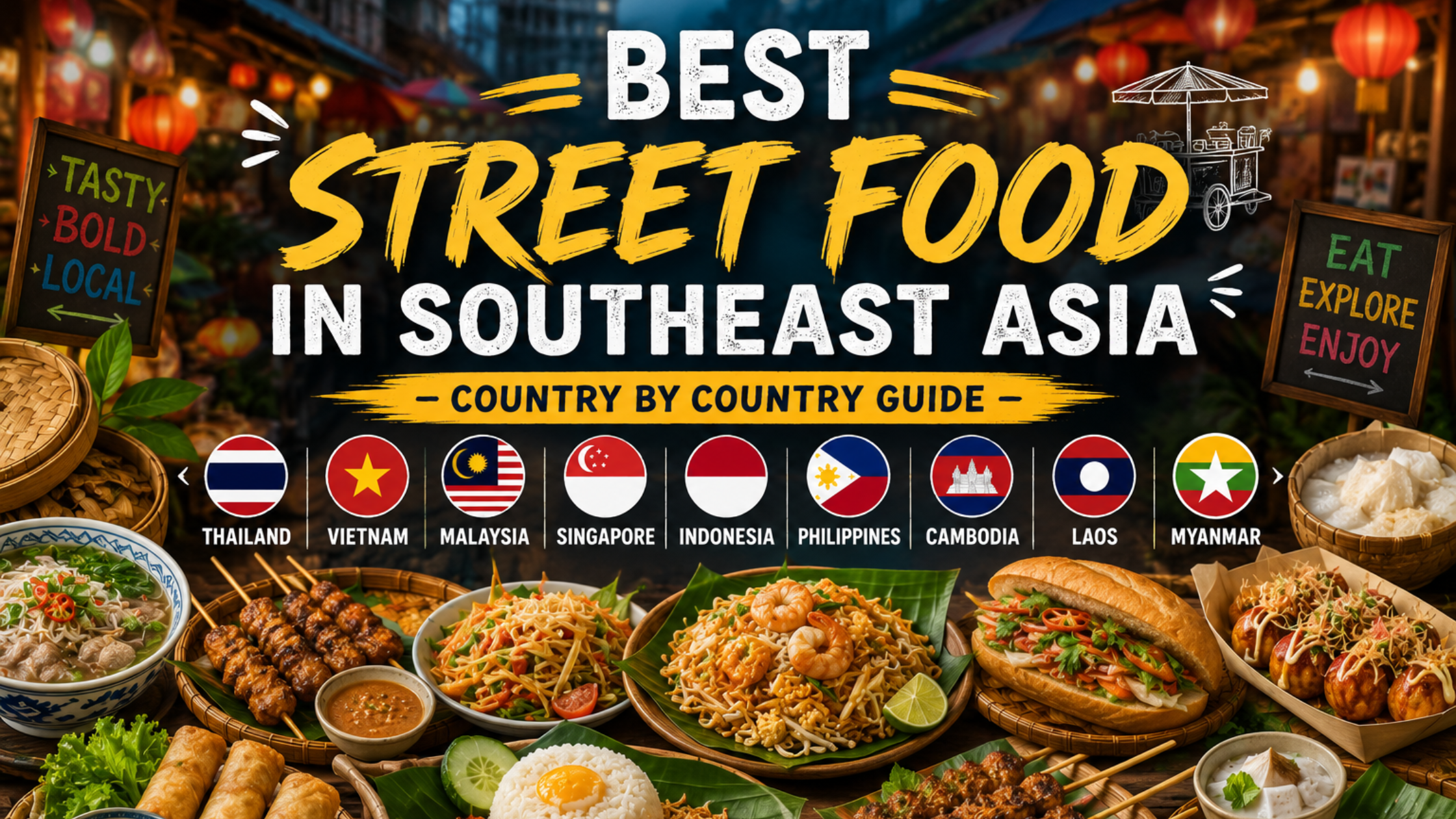
Southeast Asia produces some of the finest street food on earth, and each country has a completely distinct culinary identity that makes eating your way through the region one of the most rewarding and diverse gastronomic journeys available anywhere in the world. This complete Southeast Asia food guide breaks down the best street food in Southeast Asia country by country, covering the top dishes, the best cities for eating, and what makes each national food culture unique.
Thailand: Bold, Balanced, and Universally Loved
Thailand has arguably the most internationally recognized street food culture in Southeast Asia, built on a foundation of bold flavors balancing sweet, sour, salty, spicy, and umami in every dish.
Must-Try Thai Street Food
Pad Thai: Stir-fried rice noodles with shrimp or chicken, tamarind sauce, and peanuts. The most internationally known Thai dish and widely available from street carts across the country.
Tom Yum Goong: Hot and sour shrimp soup with lemongrass, galangal, and kaffir lime leaves. One of the most distinctive and deeply flavored dishes in the best street food Southeast Asia category.
Som Tam: Spicy green papaya salad with chili, lime, fish sauce, and peanuts. The most eaten single dish in Thailand by volume and available at practically every street stall.
Moo Ping: Grilled marinated pork skewers, the quintessential Bangkok morning street food.
Best Cities for Thai Street Food
Bangkok’s Chinatown (Yaowarat) is the most celebrated street food destination in Thailand, transforming into a spectacular food market every evening. Chiang Mai’s Night Bazaar and Saturday Walking Street offer the best northern Thai food. Phuket Town has excellent southern Thai specialties.
Vietnam: Fresh, Herbal, and Deeply Regional
Vietnam’s street food is built on a philosophy of freshness and balance, with rice noodles, clear broths, and abundant fresh herbs creating a lighter, more delicate flavor profile than Thailand’s bolder preparations.
Must-Try Vietnamese Street Food
Pho: Vietnam’s most famous dish, a clear broth rice noodle soup with beef or chicken. Northern (Hanoi) and southern (Ho Chi Minh City) versions differ significantly in broth character and garnish abundance.
Banh Mi: The world’s greatest sandwich, a French baguette filled with pork, pate, pickled vegetables, and herbs. Banh Mi Phuong in Hoi An is universally rated the finest in the country.
Bun Bo Hue: Spicy lemongrass beef noodle soup from the imperial city of Hue, significantly bolder and more complex than pho.
Goi Cuon: Fresh spring rolls filled with shrimp, pork, and herbs in translucent rice paper, served with peanut sauce. One of the lightest and most refreshing dishes in the best street food Southeast Asia repertoire.
Best Cities for Vietnamese Street Food
Hanoi for pho, bun cha, and egg coffee. Hoi An for Cao Lau, White Rose dumplings, and Banh Mi Phuong. Ho Chi Minh City for com tam and the full southern Vietnamese street food spectrum.
Malaysia: The Most Diverse Street Food Culture
Malaysia’s street food is the most ethnically diverse of any country in this Southeast Asia food guide, reflecting centuries of Malay, Chinese, Indian, and Peranakan culinary fusion.
Must-Try Malaysian Street Food
Char Kway Teow: Smoky stir-fried flat noodles with prawns, cockles, egg, and lap cheong, best from a charcoal wok in Penang. Considered one of the pinnacle dishes of best Asian street food.
Assam Laksa: Sour, fishy, tamarind-based noodle soup with mackerel and pineapple. One of the most distinctive and polarizing flavors in the region.
Nasi Lemak: Coconut rice with fried anchovies, peanuts, cucumber, egg, and sambal. Malaysia’s national dish and available at every meal from every type of food stall.
Roti Canai: Flaky flatbread with curry dipping sauce, available 24 hours at mamak stalls and one of the most comforting and affordable foods on the entire Southeast Asia food guide.
Best Cities for Malaysian Street Food
Penang’s George Town is the single finest street food destination in Malaysia and one of the top five in all of Asia. Kuala Lumpur’s Jalan Alor and Old Town hawker centers offer excellent variety. Malacca’s Jonker Street Night Market provides the most culturally distinctive food experience.
Bali: Unique, Spiced, and Underrated
Bali’s food culture is less internationally celebrated than the other countries in this Southeast Asia food guide but deeply distinctive, reflecting the island’s unique Hindu Balinese culture in its use of spice pastes, ceremonial dishes, and fresh tropical ingredients.
Must-Try Balinese Street Food
Nasi Goreng Bali: The Balinese version of fried rice, made with the island’s distinctive spice paste and typically topped with a fried egg and satay skewer. The most widely eaten dish in Bali cuisine.
Babi Guling: Slow-roasted suckling pig stuffed with spices including turmeric, lemongrass, and galangal. The most celebrated ceremonial and street food dish unique to Bali.
Sate Lilit: Minced fish or chicken mixed with coconut and spices, wrapped around lemongrass stalks and grilled. A distinctly Balinese take on satay.
Nasi Campur: A plate of rice surrounded by small portions of multiple dishes, the everyday rice plate of the Balinese people and a great introduction to the full range of Bali food.
Best Places for Bali Street Food
Ubud’s traditional warungs and the market around the Ubud Traditional Market area offer the most authentic local Balinese food. Kuta and Seminyak warungs are more accessible but slightly more tourist-oriented.
Best Street Food Southeast Asia: Country Comparison
| Country | Signature Street Food | Food Philosophy | Best City |
|---|---|---|---|
| Thailand | Pad Thai, Som Tam, Tom Yum | Bold, balanced, spicy | Bangkok Chinatown |
| Vietnam | Pho, Banh Mi, Bun Cha | Fresh, herbal, regional | Hoi An, Hanoi |
| Malaysia | Char Kway Teow, Assam Laksa | Multicultural, diverse | Penang George Town |
| Bali | Babi Guling, Nasi Campur | Spiced, ceremonial | Ubud warungs |
Universal Street Food Tips for Southeast Asia
Choose busy stalls with high turnover for the freshest and safest food. Eat where locals eat rather than at restaurants positioned primarily for tourists. Ask locals or your guesthouse host for their personal recommendations, which consistently yield better eating than any guidebook list. Try the regional specialties in the cities where they originate, as food authenticity is always highest at the source.
Frequently Asked Questions
Q: Which country has the best street food in Southeast Asia?
This is genuinely contested. Thailand wins on global name recognition. Vietnam wins on freshness and regional diversity. Malaysia wins on multicultural depth. Choosing one is difficult, and most travelers who complete the full circuit find themselves passionate defenders of all four.
Q: Is Southeast Asia street food safe to eat?
Yes, generally. Busy, high-turnover stalls with freshly prepared food are very safe across all four countries. Standard precautions (watch the food being prepared, choose cooked-to-order over pre-prepared, drink bottled water) apply throughout the region.
Q: What is the best city for street food in Southeast Asia?
Bangkok, Penang’s George Town, and Hanoi are consistently rated the top three best Asian street food cities in the region by food writers and experienced travelers.