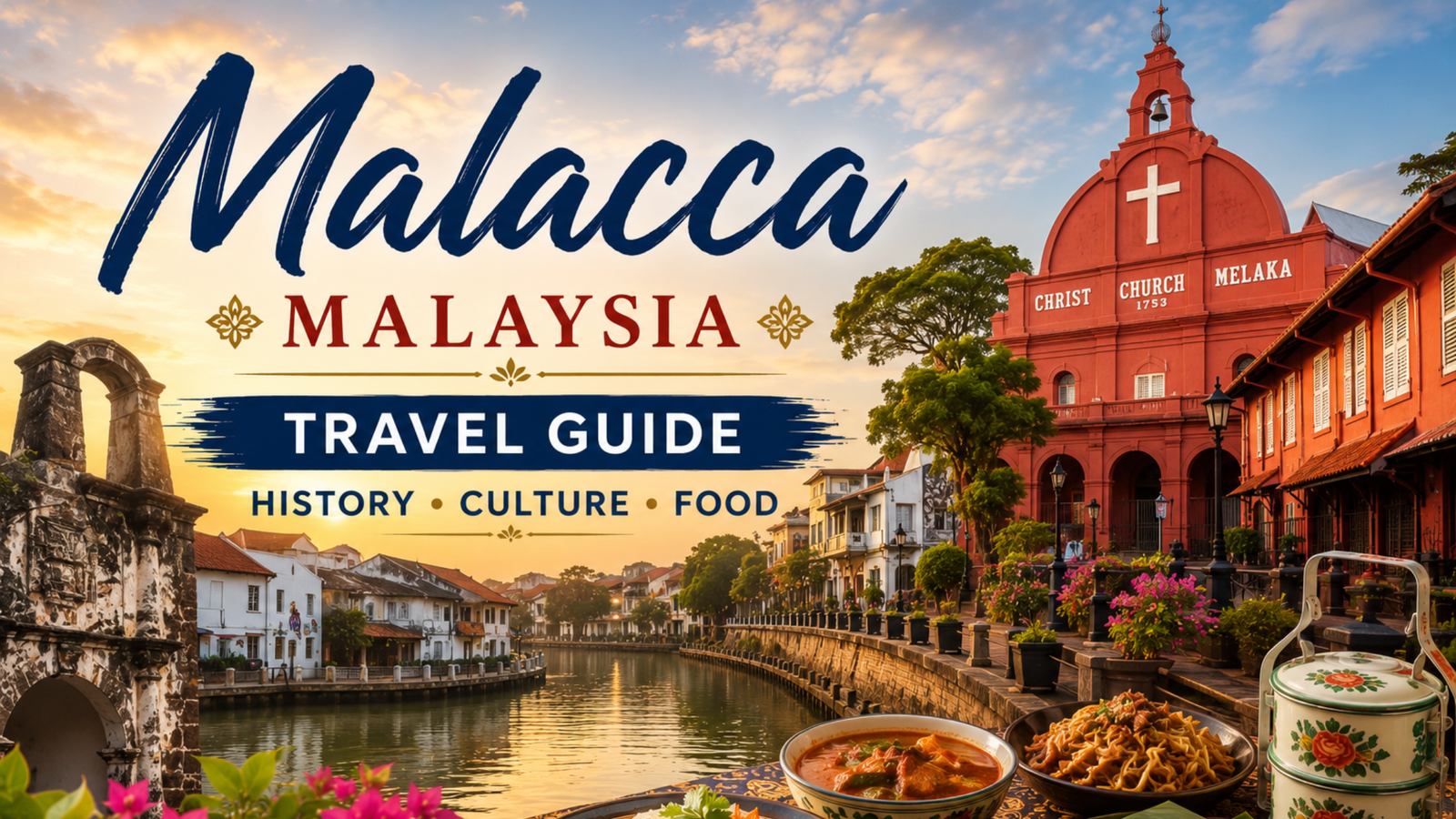
Malacca (also spelled Melaka) is one of the most historically significant cities in all of Southeast Asia, a UNESCO World Heritage Site that served as one of the most important trading ports in the world during the 15th and 16th centuries. Under the Malacca Sultanate, the city attracted merchants from Arabia, India, China, and Portugal, leaving behind a layered cultural and culinary heritage that makes it one of the most fascinating destinations in Malaysia today.
This complete Malacca travel guide covers the essential things to do Malacca has on offer, the city’s remarkable heritage landmarks, and the extraordinary food culture that has made Malacca Malaysia tourism increasingly popular with visitors from around the region.
Why Visit Malacca
Malacca is a city where history lives in the streets. The Malacca heritage city designation reflects centuries of Portuguese, Dutch, and British colonial architecture sitting alongside Peranakan shophouses, Chinese clan temples, Hindu shrines, and Malay mosques in a remarkably compact historic center that is navigable entirely on foot.
The food culture of Malacca is equally extraordinary. As the birthplace of the Peranakan (Straits Chinese) culture, Malacca developed a distinctive cuisine blending Chinese and Malay ingredients and cooking techniques that produced dishes found nowhere else with quite the same character.
Top Things to Do in Malacca
1. Jonker Street (Jalan Hang Jebat)
Jonker Street is the beating heart of Malacca’s cultural and food tourism, a beautifully preserved street of colorful Peranakan shophouses housing antique shops, art galleries, cafes, and the famous Jonker Street Night Market held every Friday and Saturday evening. Walking Jonker Street is the single most essential thing to do in Malacca, capturing the city’s multicultural layering in every storefront.
2. A Famosa (Portuguese Fortress)
A Famosa is all that remains of the Portuguese fortress built in 1511, the oldest surviving European architectural remain in Asia outside of the Indian subcontinent. The Porta de Santiago gatehouse, which survived British demolition in the early 19th century, is one of the most historically significant Malacca heritage city landmarks.
Entry: Free
3. Christ Church Malacca and Dutch Square
The bright red Christ Church on Dutch Square, built in 1753 during the Dutch colonial period, is one of the oldest Protestant churches in Southeast Asia and one of the most photographed Malacca Malaysia tourism landmarks. The surrounding Dutch Square, with its red buildings, old fountain, and brightly colored trishaw rides, is a compact visual summary of Malacca’s colonial heritage.
Entry: Free (small donation for church entry)
4. St Paul’s Church and Hill
Atop St Paul’s Hill, the ruins of the 16th-century Portuguese church of St Paul offer panoramic views over Malacca and the strait, alongside the original gravestone of St Francis Xavier, the Jesuit missionary who spent time in Malacca. The ruined structure with its open sky ceiling is deeply atmospheric.
Entry: Free
5. Baba Nyonya Heritage Museum
This beautifully preserved Peranakan townhouse museum on Heeren Street offers the most intimate and detailed look at the distinctive Baba Nyonya (Peranakan) culture that developed in Malacca over centuries of Chinese-Malay cultural fusion. The intricate tiles, antique furniture, ceremonial items, and guided tour narrative make this one of the most culturally enriching things to do in Malacca.
Entry fee: Approximately $3 to $5 per person with guided tour
6. Cheng Hoon Teng Temple
Established in 1646, Cheng Hoon Teng is the oldest functioning Chinese temple in Malaysia. The ornate architecture, incense smoke, and active religious community make it a genuinely living cultural site rather than a purely historical one.
Entry: Free (donations welcome)
7. Jonker Street Night Market
Every Friday and Saturday evening, Jonker Street transforms into one of the liveliest night markets in Malaysia, with food stalls, craft vendors, and live cultural performances creating an atmosphere that is deeply enjoyable for all types of travelers. Chicken rice balls, cendol, and Nyonya kueh (Peranakan sweet cakes) are the night market food highlights.
Malacca Food: What to Eat
Chicken Rice Balls
Malacca’s most famous dish, chicken rice balls are poached chicken served over individual round balls of rice pressed into shape rather than the typical loose serving, a distinctive and beloved Malacca Malaysia tourism food experience. Hoe Kee Chicken Rice on Jonker Street is the most celebrated address.
Nyonya Laksa
Malacca’s Nyonya Laksa is a rich, slightly sweet coconut milk-based noodle soup, distinctly different from the sour Penang Assam Laksa, reflecting the Peranakan culinary tradition.
Cendol Malacca
Malacca’s version of the classic Malaysian dessert, often served with extra durian for a richer, more distinctive flavor.
Satay Celup
A Malacca specialty where skewered raw ingredients are cooked at the table in a shared communal pot of satay sauce, a fun and social dining experience unique to the city.
Getting to Malacca
From Kuala Lumpur: Buses from TBS (Terminal Bersepadu Selatan) to Malacca Sentral take approximately 2 to 2.5 hours and cost approximately $5 to $7 one way. Grab or taxi from Malacca Sentral to the heritage city center costs approximately $3 to $5. No direct train service connects KL to Malacca.
Sample Malacca Itinerary: 2 Days
| Day | Focus |
|---|---|
| Day 1 | Dutch Square, Christ Church, A Famosa, St Paul’s Hill, Jonker Street Night Market |
| Day 2 | Baba Nyonya Museum, Cheng Hoon Teng, Nyonya food lunch, riverside afternoon |
Frequently Asked Questions
Q: Is Malacca worth visiting from Kuala Lumpur?
Absolutely. Malacca is one of the most historically and culturally rich cities in Southeast Asia, accessible as a day trip but better appreciated with an overnight stay.
Q: How many days should I spend in Malacca?
1 to 2 days covers the main Malacca heritage city highlights. Staying overnight allows you to enjoy both the daytime historical sites and the Jonker Street Night Market.
Q: What is Malacca famous for?
Malacca is famous for its UNESCO World Heritage historic city, the distinctive Peranakan (Baba Nyonya) culture, its Portuguese, Dutch, and British colonial architecture, and the unique chicken rice balls that are the most iconic Malacca food.
Q: Is Malacca good for street food?
Yes, exceptionally. The Jonker Street Night Market and surrounding heritage streets offer some of the most distinctive and historically layered street food culture in Malaysia.