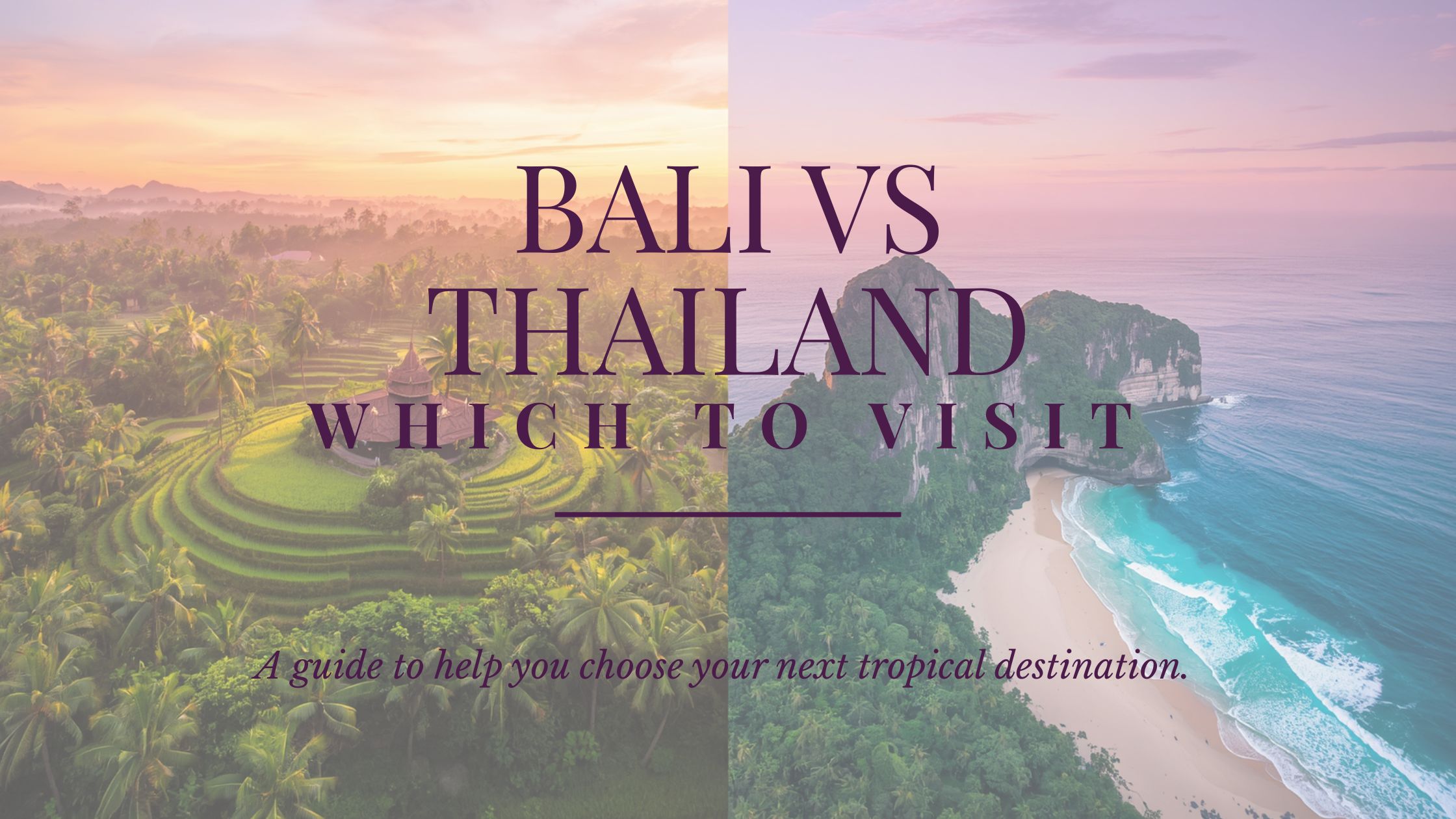
A German backpacker asked me this question at a hostel breakfast in Canggu, and the whole table went quiet. Six travelers, six opinions, and suddenly breakfast turned into a full debate. The Australian surfer said Bali, obviously. The British couple said Thailand, no contest. Someone almost knocked over the banana pancakes making a point about street food.
That morning is half the reason this blog is called Debate Travel.
Here is my advantage in this argument: I have traveled both. I lived and worked in Bali for weeks as a digital nomad, and I did the same in Thailand, from Bangkok’s chaos to the islands. So this is not a comparison written from Google searches. This is Bali vs Thailand from someone who has eaten the nasi goreng and the pad thai, paid for guesthouses in both currencies, and made mistakes in both countries.
Let me give you the short answer first, then we fight it out round by round.
The short answer: Thailand is the better first trip for most travelers. Bali is the better trip for a specific kind of traveler. By the end of this post, you will know exactly which one you are.
The Key Difference Nobody Mentions First
Before we get into beaches, food, and nightlife, there is one thing you need to understand. This comparison is not exactly fair, because Bali is one island within Indonesia, while Thailand is an entire country almost 100 times larger.
This changes how you plan your trip completely.
Bali is compact enough that you can stay in one place, hire a private driver, and see beaches, waterfalls, temples, and rice terraces without ever catching a domestic flight. Thailand requires real logistics. Moving from Bangkok to Chiang Mai to the islands means flights, overnight trains, ferries, and multiple unpacking sessions.
If you only have 7 to 10 days, Bali is almost always easier. If you have 3 to 4 weeks and want variety, Thailand starts making a lot more sense.
Round 1: Cost of Travel
This round is closer than most people expect.
In Bali, my daily mid-range spending was around 40 to 60 USD with a private guesthouse room, warung meals, and a scooter. In Thailand, the same lifestyle cost me almost exactly the same, around 40 to 55 USD per day.
The differences hide in the details. Thai street food is slightly cheaper and far more available. In Bangkok I ate incredible pad kra pao from a street cart for about 60 baht, under 2 dollars, at midnight on a random Tuesday. Bali has cheap warungs, but the street food culture is smaller.
Bali fights back with accommodation. Private rooms and villas in Bali are cheaper for what you get, especially outside peak season. My 18 dollar guesthouse in Ubud with garden views and homemade breakfast would cost noticeably more in a comparable Thai tourist area.
The luxury comparison is where Bali really pulls ahead. For 180 to 350 USD a night, you can rent an architecturally stunning private pool villa in Uluwatu or Canggu that would cost 500 to 1,000 USD per night in Thailand’s equivalent resort hubs.
Budget breakdown at a glance:
| Travel Style | Bali | Thailand |
|---|---|---|
| Backpacker (per day) | 25 to 35 USD | 20 to 30 USD |
| Mid-range (per day) | 40 to 60 USD | 40 to 55 USD |
| Luxury (per night, villa) | 180 to 350 USD | 500 to 1,000+ USD |
| Street food meal | 1.50 to 2.50 USD | 1 to 2 USD |
| Scooter rental (per day) | 4 to 5 USD | 6 to 9 USD |
Winner: Tie. Your travel style decides this, not the country. Backpackers lean Thailand. Couples, families, and mid-range travelers lean Bali.
Round 2: Beaches and Islands
I am going to upset some people now.
Thailand wins this round for classic beach paradise, and it is not particularly close. The beaches of Krabi, Koh Phi Phi, and the Andaman coast have that postcard look: white sand, turquoise water, limestone cliffs rising out of the sea. The first time I saw Railay Beach from the boat, I actually laughed out loud. It did not look real.
But the comparison is more nuanced than most people say.
Bali’s coastline changes dramatically depending on where you go. Uluwatu has dramatic cliffs 70 meters above the ocean and world-class surf breaks. Canggu and Seminyak have beach clubs and sunset culture. Sanur has calm swimming beaches. Amed in East Bali has black sand, coral reefs, and a shipwreck you can snorkel in 15 minutes from shore. Nusa Penida has the most dramatic coastal scenery I have ever seen anywhere, including that famous Kelingking Beach cliff.
Thailand has more islands and more variety of island destinations. But within those islands, the beach experience is more similar to itself. Bali offers more variety of coastal landscape within one island.
Winner: Thailand for classic white-sand beach paradise. Bali for variety, surf culture, cliffs, and dramatic coastal scenery.
Round 3: Food
Thai food is the better cuisine for most travelers. The range is wider, the flavors hit harder, and the street food scene is one of the best on the planet. Pad thai, green curry, mango sticky rice, boat noodles, som tam. In Bangkok you can eat a different legendary dish every meal for a month.
Balinese food is underrated and I will defend it forever. Babi guling, sate lilit, and nasi campur from a good warung are world-class meals. But the depth is smaller, and in tourist areas, Bali’s food scene leans heavily on Western cafes, smoothie bowls, and brunch culture.
For vegetarians, this round flips completely. Bali, especially Ubud, is one of the most vegetarian-friendly places I have ever traveled. Dozens of plant-based cafes, organic restaurants, and Indian eateries exist because the island’s Hindu heritage means vegetarian food is normal, not a special request.
Thailand is manageable but fish sauce sneaks into almost everything, including dishes that look vegetarian.
Bali also wins on Western and healthy food. A smoothie bowl in Phuket costs around 10 dollars. In Canggu, the same bowl costs 3 to 5 dollars. Bali’s cafe culture is genuinely world-class for digital nomads and health-conscious travelers.
Winner: Thailand for street food, local cuisine, and flavor variety. Bali for vegetarians, healthy eating, and cafe culture.
Round 4: Culture and Temples
Bali wins this one clearly, and here is why.
Thailand has magnificent temples. Wat Pho, Wat Arun, the White Temple in Chiang Rai. They are grand, golden, and unforgettable. But in Thailand, culture often felt like something I went to visit.
In Bali, culture is something you live inside. Bali is a Hindu island in the world’s largest Muslim country, and its traditions are woven into every single day. Flower offerings on every doorstep each morning. Ceremonies that casually close entire roads. Temple festivals where the whole village shows up in white. My guesthouse owner once apologized that breakfast would be late because the family had a ceremony, then invited me to join it.
As an Indian traveler, Bali hit differently. Watching the Ramayana performed as a Kecak fire dance at Uluwatu, hearing familiar gods’ names pronounced in new ways, seeing a version of Hinduism that evolved separately for a thousand years. No country has given me that feeling before or since.
The daily offerings called canang sari appear outside every home and shop every single morning. This is not a tourist display. This is life.
Winner: Bali, clearly and decisively.
Round 5: Ease of Travel for First Timers
Thailand takes this round on pure infrastructure.
Thailand has been hosting mass tourism for decades and it shows, in the best way. Trains, buses, cheap domestic flights, and ferries connect everything. English is widely understood in tourist areas. The 7-Eleven on every corner becomes your best friend. Moving from Bangkok to Chiang Mai to the islands is so smooth it almost plans itself.
Bali is one island, so distances look small on the map, but the traffic is genuinely brutal. A 28 kilometer drive between Canggu and Ubud can take two hours in peak season. There is no train, public transport barely exists, and you depend on scooters, Grab, Gojek, and private drivers for everything.
Visas are simple in both. Thailand now offers 60 days visa-free for most nationalities. Bali requires a Visa on Arrival costing around 35 USD for 30 days.
Winner: Thailand. It is the easiest country in Southeast Asia for a first international trip.
Round 6: Nightlife and Social Scene
If clubbing and parties are high on your list, Thailand wins without contest.
Bangkok’s nightlife ranges from rooftop bars with stunning city views to Khao San Road backpacker chaos to sophisticated cocktail lounges. Phuket’s Bangla Road is sensory overload. Koh Phangan hosts the legendary Full Moon Party. Thailand’s party infrastructure is decades old and deeply developed.
Bali’s scene is beach clubs and sunset sessions. Savaya in Uluwatu, Finns in Canggu, Potato Head in Seminyak. It is more about a long golden evening with cocktails and ocean views than about a wild night ending at 5 AM. The vibe is stylish and lifestyle-focused rather than chaotic.
For solo travelers wanting to meet people, both countries are equally easy. Hostels in both are extremely social and well-organized around group activities.
Winner: Thailand for backpacker nightlife, beach parties, and all-night intensity. Bali for beach clubs, sunset cocktails, and atmosphere.
Round 7: Beaches for Surfing
This is where Bali wins without question, and Thailand cannot compete.
The island is built for surfing. Uluwatu, Padang Padang, Keramas, and Canggu’s Batu Bolong offer world-class reef breaks for every level. Beginners can take lessons on gentle beach breaks in Kuta and Canggu while experts charge Uluwatu’s powerful lefts.
In Thailand, surfing exists in minimal spots and is very niche by comparison. The Gulf of Thailand simply does not produce consistent surf. If learning to surf or continuing a surf journey is part of your plan, Bali is the only answer.
Winner: Bali, by a massive margin.
Round 8: Digital Nomads and Longer Stays
I have worked with my laptop from both countries, so this round is personal.
Bali wins for me. Canggu and Ubud are two of the best digital nomad bases in the world. The cafe density, the coworking spaces, the villa-with-pool lifestyle at reasonable prices, the community of people building things and chasing dreams. As someone who has worked online, Bali is the only place that ever made me consider not leaving.
Chiang Mai in Thailand is the original digital nomad capital and remains the cheaper option. Bangkok has big city energy and incredible food between work sessions. But the community feeling I found in Bali was stronger, more creative, and more internationally connected.
Winner: Bali, by a comfortable margin for remote workers.
The Scorecard
| Round | Winner |
|---|---|
| Cost | Tie |
| Beaches and Islands | Thailand |
| Food | Thailand |
| Vegetarian Food | Bali |
| Culture and Temples | Bali |
| Ease for First Timers | Thailand |
| Nightlife | Thailand |
| Surfing | Bali |
| Digital Nomad Life | Bali |
| Luxury Value | Bali |
On points, Thailand leads. But travel decisions are not made on points, so here is the verdict that actually matters.
Who Should Go Where
Visit Thailand first if:
- This is your first trip to Southeast Asia or your first big international trip
- You want variety: city, mountains, islands, all in one country
- Street food is a top priority
- You want the easiest possible travel logistics
- Classic white sand beaches are your dream
- You are backpacking on a tight budget
Visit Bali first if:
- You want one base instead of constant moving
- Culture and spirituality matter more to you than nightlife
- You are a digital nomad or planning a longer, slower stay
- You are vegetarian or health-conscious
- You want to learn to surf
- A private villa experience with a couple or family is the goal
- You have 7 to 10 days and want to maximize experience
Visit both if:
- You have 3 to 4 weeks in Southeast Asia
- Flights between Bangkok and Denpasar take around 4 hours and are often cheap
- My ideal route: Bangkok, Chiang Mai, Krabi, then fly to Bali to slow down
Where to Stay in Each Destination
In Bali:
- Ubud for culture, rice terraces, jungle, and digital nomad cafes
- Canggu for surfing, beach clubs, and the nomad community
- Uluwatu for cliffs, surf breaks, and dramatic sunsets
- Sanur for calm beaches, families, and as a ferry base to the islands
- Sidemen for something completely off the tourist trail
- Amed for diving, black sand beaches, and total quiet
In Thailand:
- Bangkok for city energy, temples, street food, and rooftop bars
- Chiang Mai for culture, mountains, and digital nomad life
- Krabi for the most dramatic beach scenery in Southeast Asia
- Koh Phangan if you want the Full Moon Party experience
- Phuket for variety of beaches and a developed tourism infrastructure
- Pai for mountain air, waterfalls, and a completely different side of Thailand
My Honest Final Verdict
Here is the breakfast-table answer I gave that German backpacker in Canggu: go to Thailand first, because it teaches you how to travel Asia. Then come to Bali second, because by then you will know how to slow down and actually live in a place.
He booked Bangkok that evening. Three months later he messaged me from Ubud saying I was right about both.
The best Southeast Asia destination is not one country anyway. It is the region, and the real win is making sure both are on your list. If budget allows only one this year, you now know which one is yours.
Disagree with my verdict? Good. This is Debate Travel, and the comments section is the debate floor. Tell me why I am wrong about the beaches. The Australians always do.
FAQs
Is Bali or Thailand cheaper?
They cost almost the same at the mid-range level. My daily spending was 40 to 60 USD in both. Thailand has cheaper street food and public transport, making it better for strict backpackers. Bali has better value on private villas and mid-range accommodation, making it better for couples and comfort travelers.
Is Bali or Thailand better for first-time travelers?
Thailand is easier for a first trip. Tourism infrastructure is more developed, transport between cities and islands is straightforward, and English is widely spoken. Bali is wonderful but its traffic and lack of public transport require more patience.
Which has better beaches, Bali or Thailand?
Thailand wins for classic white-sand island beaches and calm turquoise water. Bali wins for variety, dramatic cliffs, surf breaks, black sand coastlines, and beach clubs, all within one compact island.
Is Bali or Thailand better for couples and honeymoons?
Bali edges this one. Private pool villas at reasonable prices, cliff sunsets, spa culture, and a slower romantic pace make it a honeymoon favorite. Thailand counters with luxury island resorts in Koh Samui and Phuket, but Bali’s villa culture wins for most couples.
How many days do you need in each?
Bali works well in 7 to 10 days because everything is on one island. Thailand needs 10 to 14 days minimum to experience Bangkok, the north, and the islands without rushing. If you have only one week, that alone is a strong reason to pick Bali.
Is Thailand or Bali safer?
Both are very safe for travelers. The biggest real dangers in both countries are scooter accidents and strong ocean currents, not crime. Thailand’s larger tourist areas can have more taxi scams and tourist-targeted overcharging. Bali generally feels calmer and less pressured overall.
Can I visit both Bali and Thailand in one trip?
Yes, and it is an excellent combination. Flights between Bangkok and Denpasar take around 4 hours and are often cheap. With 3 to 4 weeks, you can experience Thailand’s highlights and then slow down in Bali at the end.
Which is better for digital nomads, Bali or Thailand?
I have worked remotely from both, and Bali wins for me. Canggu and Ubud have the best nomad communities, cafes, and coworking spaces I have found anywhere in the world. Chiang Mai in Thailand is the cheaper classic option and still excellent. Either will make working from home feel like a punishment by comparison.
Which is better for vegetarians?
Bali, without question. Its Hindu heritage means vegetarian food is normal and plentiful everywhere. Thailand is manageable but requires more navigation around hidden fish sauce and meat stock.
Is Bali in Thailand?
No. Bali is an island in Indonesia, not Thailand. The two countries are separate nations in Southeast Asia, connected by cheap regional flights through hubs like Singapore and Kuala Lumpur.