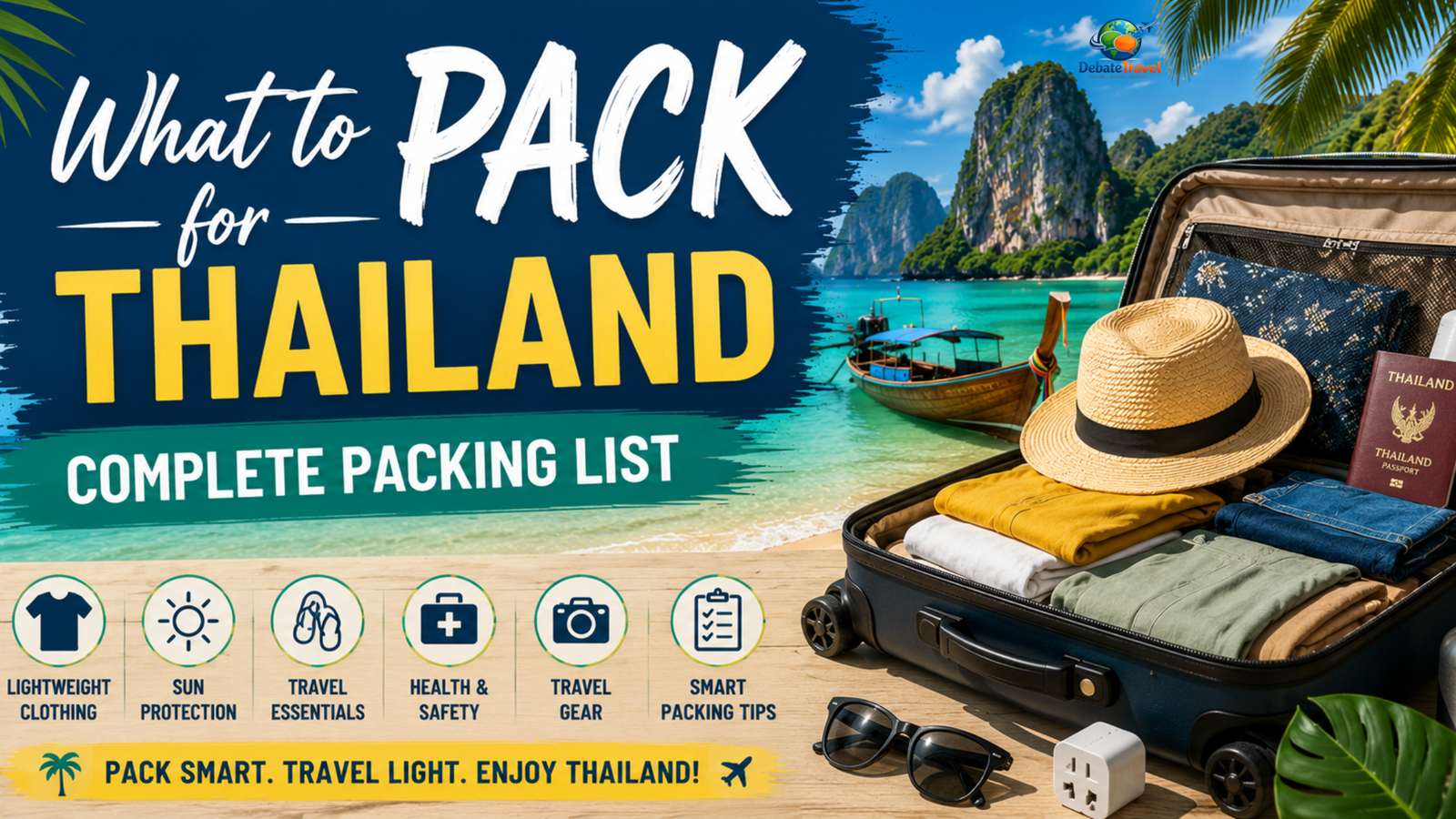
Knowing exactly what to pack for Thailand can make the difference between a smooth, comfortable trip and one spent searching for forgotten essentials at inflated tourist prices. Thailand’s climate, culture, and mix of activities require a thoughtfully assembled Thailand packing list that balances light travel with genuine preparedness.
This complete guide covers everything to bring to Thailand, from clothing and footwear to documents and health essentials, organized for easy reference before your trip.
Understanding Thailand’s Climate Before Packing
Thailand has a tropical climate with hot and humid conditions year-round. The country has three broad seasons: a hot and dry season (March to May), a wet season with afternoon monsoon rains (June to October), and a cool, drier season (November to February) that is the most popular time for Thailand tourism.
Regardless of the season, your Thailand packing list should prioritize lightweight, breathable clothing. If traveling during the wet season, a compact rain jacket or poncho is an important addition to what to bring Thailand specifically.
Clothing: What to Pack for Thailand
Lightweight, Breathable Tops
Pack a mix of t-shirts, tank tops, and light linen or cotton shirts. Synthetic quick-dry fabrics also work well, particularly for active travelers moving between beaches, cities, and temples. Avoid heavy cotton that retains moisture and takes long to dry in humid conditions.
Shorts and Light Trousers
Shorts are fine for beach areas, markets, and casual exploring. However, light trousers or long pants are essential when visiting temples throughout the country, a key piece of Thailand packing list advice often overlooked by first-time visitors.
Modest Temple Outfits
This is among the most important items in the what to pack for Thailand category. At least one outfit with covered shoulders and knees is required for temple visits. A light linen shirt or blouse and long pants or a maxi skirt cover most situations. Many temples sell or rent cover-ups, but having your own is more convenient.
Swimwear
Pack at least two swimsuits for the inevitable mix of beach days, resort pools, and island water sports. Quick-dry swimwear is preferable given how frequently it will need to be used.
Light Layer for Air Conditioning
Thai air conditioning in malls, cinemas, restaurants, and overnight buses and trains can be extremely cold. A light cardigan, hoodie, or long-sleeve layer is one of the most consistently useful Thailand travel essentials for staying comfortable indoors.
Rain Jacket or Poncho
If traveling during the wet season (June to October), a compact packable rain jacket is essential. Even during the dry season, brief showers occur, making a lightweight poncho a practical addition to any Thailand packing list.
Footwear: What to Bring Thailand
Comfortable sandals or flip flops are essential for beach life and casual walking in hot weather. Closed-toe walking shoes or sneakers are important for temple visits, trekking, and hill town exploration (such as Pai or Chiang Mai’s night markets). If planning jungle treks or waterfall hikes, lightweight hiking sandals with good grip or proper hiking shoes are valuable Thailand travel essentials.
Note that shoes are removed frequently when entering temples and many guesthouses, so slip-on footwear that is easy to take on and off is significantly more convenient than laced shoes.
Sun and Heat Protection: Essential Thailand Travel Essentials
Reef-safe sunscreen is important both for personal protection given Thailand’s intense tropical sun and for environmental responsibility around coral reefs at snorkeling and diving destinations. A wide-brimmed hat or cap is essential for outdoor exploration during the hot season. Quality UV-protective sunglasses round out the sun protection section of what to pack for Thailand.
Health and Medications
A basic first aid kit including bandages, antiseptic cream, anti-diarrhea tablets, and rehydration salts is a practical addition given the combination of heat, unfamiliar food, and outdoor activity typical of a Thailand trip. Insect repellent containing DEET or picaridin is important for protection against mosquito-borne illness, particularly during dawn and dusk hours. Personal prescription medications should be packed in original containers with copies of prescriptions.
Over-the-counter medications are widely available in Thai pharmacies at low cost, making it unnecessary to overpack in this category, though having basic supplies avoids inconvenient shopping when you are unwell.
Documents: What to Bring Thailand
A passport with at least six months validity is the primary essential document for any Thailand trip. Many nationalities receive a tourist visa exemption on arrival, but always verify current requirements for your specific nationality before traveling. Travel insurance documentation is strongly recommended, covering medical treatment, scooter accidents, and emergency evacuation. Copies (digital and printed) of your passport, visa, accommodation bookings, and flight confirmations are useful backup documents in case of loss or theft.
An International Driving Permit (IDP) is needed if you plan to rent a scooter or car in Thailand, particularly in Chiang Mai and the islands where self-drive transport is popular.
Electronics and Gadgets
Thailand uses Type A, B, and C plugs at 220V, so a universal travel adapter is a practical Thailand travel essential. A portable power bank keeps devices charged during long days exploring temples, markets, and beaches. A waterproof phone case or pouch protects your device during beach days, boat trips, and the rainy season.
A local SIM card or eSIM, easily purchased at the airport upon arrival, provides affordable data throughout the trip and is one of the most useful additions to any Thailand packing list.
Practical Extras for Packing Thailand
A reusable water bottle is both economically and environmentally sensible, as bottled water purchases add up quickly over a longer trip. A dry bag protects valuables during boat trips, island hops, and rainy season scooter rides. A small daypack or crossbody bag works well for day trips, keeping your hands free while carrying essentials securely.
A sarong or light scarf is one of the most versatile items on any Thailand packing list, useful as a beach cover-up, temple modesty cover, light blanket on cold air-conditioned transport, and emergency rain cover.
What NOT to Overpack for Thailand
Heavy jackets and cold-weather clothing are unnecessary even in the northern highlands, where a light layer is sufficient year-round. Formal wear is rarely needed in Thailand’s casual tourist environments. Excessive electronics and gadgets add weight without proportional benefit given how easily most items can be rented or borrowed throughout the country.
Complete Thailand Packing List: Quick Reference
| Category | Items |
|---|---|
| Clothing | Light tops, shorts, light trousers, modest temple outfit, swimwear (x2), light layer for AC, rain jacket |
| Footwear | Sandals, closed-toe shoes, optional hiking sandals |
| Sun protection | Reef-safe sunscreen, hat, sunglasses |
| Health | First aid kit, insect repellent, personal medications |
| Documents | Passport, visa info, IDP (if driving), travel insurance, booking confirmations |
| Electronics | Universal adapter, power bank, waterproof phone pouch, local SIM |
| Extras | Reusable water bottle, dry bag, daypack, sarong |
Frequently Asked Questions
Q: What is the most important thing to pack for Thailand?
Modest clothing for temple visits and insect repellent are the two most commonly overlooked but genuinely important items on any Thailand packing list, particularly for first-time visitors.
Q: Do I need to bring formal clothes to Thailand?
Rarely. Thailand’s tourist dress culture is casual, and even upscale beach resort dining generally does not require formal attire. A single smart-casual outfit covers most situations.
Q: Do I need to pack a sarong for Thailand?
Yes, it is one of the most versatile items on the Thailand packing list, used for temple modesty coverage, beach cover-ups, and a light wrap on air-conditioned transport.
Q: Should I bring cash or cards to Thailand?
A combination of both is ideal. Thai ATMs are widely available, though they charge a withdrawal fee of approximately 220 THB per transaction. Cash is needed for street food, markets, and many smaller local establishments.
Q: What should I pack for the wet season in Thailand?
Add a compact rain jacket or poncho and waterproof sandals to your standard Thailand packing list, and include extra dry bags to protect electronics and documents from rain during outdoor activities.
Q: Is sunscreen available in Thailand?
Yes, though reef-safe sunscreen is less commonly stocked in smaller shops and beach areas. Bringing your own reef-safe formula is recommended for anyone visiting snorkeling or diving locations.