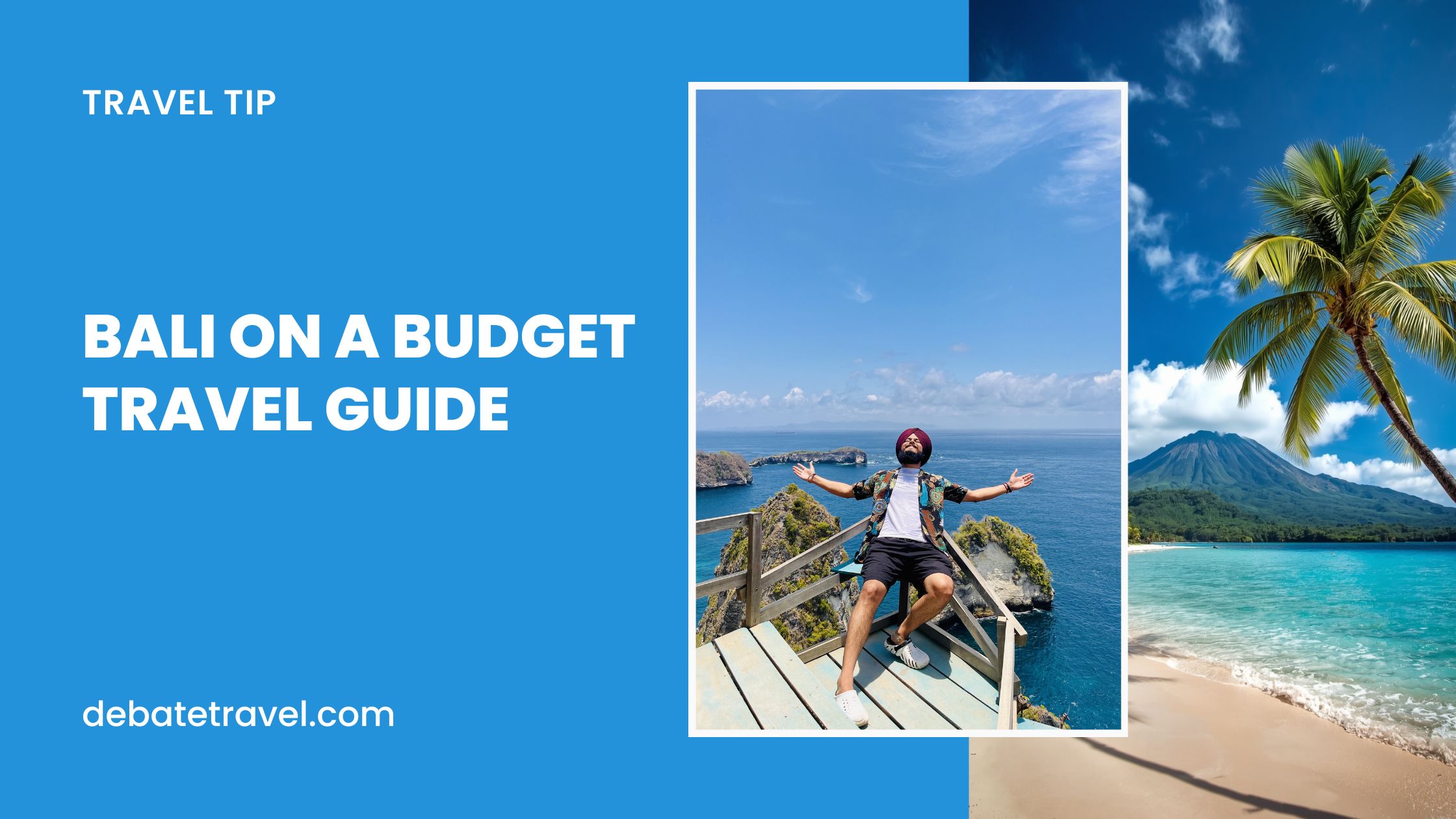

On my third day in Bali, I had two meals that changed how I understood the island.
Lunch was at a beach club in Seminyak. One smoothie bowl, one coffee, one plate of pasta. The bill came to around 350,000 rupiah, about 22 dollars. Dinner was at a tiny warung near my guesthouse, where a smiling lady served me nasi campur with a fresh juice. The bill was 30,000 rupiah. Less than 2 dollars.
Same island. Same day. One meal cost eleven times more than the other, and the cheap one was better.
That is the secret of Bali on a budget. The island runs on two parallel economies, a tourist one and a local one, existing side by side on the same street, often next door to each other. Once you learn to spot the difference, Bali becomes one of the cheapest world-class destinations on the planet.
I spent weeks there as a digital nomad, tracked every single expense, and this guide is everything I learned.
How Much Does Bali Cost? My Real Numbers
Let me answer the big question first. Here is what I found across three styles of travel:
| Travel Style | Daily Budget | What You Get |
|---|---|---|
| Backpacker | 25 to 35 USD | Hostel or guesthouse, warung food, scooter, free beaches |
| Mid-range (my style) | 40 to 60 USD | Private room with pool, mix of warungs and cafes, some paid activities |
| Comfortable | 80 to 120 USD | Nice villa or hotel, restaurants, beach clubs, tours and spa days |
For a 7-day trip, a backpacker can do Bali on roughly 200 to 250 dollars on the ground, not counting flights. When I tell people that, especially friends planning trips to Europe where 250 dollars disappears in two days, they usually do not believe me until they see my expense notes.
Accommodation: Where the Budget Magic Happens
This is the category that shocked me most. In Bali, 15 to 25 dollars a night gets you a clean private room in a guesthouse, often with air conditioning, breakfast, and sometimes a shared pool. Not a dorm bed. A private room.
My best find was a family-run guesthouse in Ubud for 18 dollars a night. The room opened onto a garden, breakfast was banana pancakes and fruit made by the owner’s mother, and the family treated me like a relative by day three.
Tips for cheap Bali accommodation:
Guesthouses and homestays beat hotels every time. Search for “homestay” or “guesthouse” instead of hotels. Same comfort, half the price, plus a local family who gives better advice than any blog, including this one.
Book the first 2 nights only, then look around in person. Walk-in rates are often cheaper than online prices, especially for stays of a week or more. I negotiated 30 percent off in Canggu just by asking about a weekly rate.
Stay slightly outside the hotspots. A room 10 minutes from central Canggu costs almost half of one in the middle of it.
Hostels are social, not just cheap. Dorm beds run 5 to 10 dollars, and Bali hostels are some of the nicest I have seen anywhere, with pools and cafe-quality breakfasts. If you are traveling solo, the connections you make here are priceless.
Book smart, not fast. Compare costs across platforms, read reviews, and ask for weekly or monthly discounts if staying longer. Booking.com often has gems that booking agents will never tell you about.
Food: Eat Where the Locals Eat
Food is where a cheap Bali trip is won or lost. My rule was simple: warungs for most meals, cafes a few times a week as a treat.
A warung is a small family-run eatery, and they are everywhere. Here is what typical meals cost me:
- Nasi goreng (fried rice) at a warung: 20,000 to 30,000 rupiah, about 1.50 to 2 dollars
- Mie goreng (fried noodles): about the same
- Nasi campur (mixed rice plate): 25,000 to 40,000 rupiah
- Fresh juice or young coconut: 15,000 to 25,000 rupiah
- Smoothie bowl at a trendy cafe: 60,000 to 90,000 rupiah
- Western meal at a nice restaurant: 100,000 to 200,000 rupiah
My single best food memory was not in any cafe. It was a satay stand on the side of the road in Ubud, where an old man grilled chicken skewers over coconut charcoal. Ten skewers with rice cakes and peanut sauce for 25,000 rupiah. I went back four times.
One trick nobody mentions: look for the words “warung makan” and plastic chairs on the street. Plastic chairs are the international symbol of delicious cheap food, and Bali respects this law completely.
Also worth visiting: Bali’s local morning and night markets. You will find authentic Indonesian food at prices even warungs cannot match, plus an experience that no tourist restaurant can replicate.
Transport: The Scooter Question
Budget transport in Bali comes down to one decision: scooter or no scooter.
A scooter rental costs 60,000 to 80,000 rupiah per day, around 4 to 5 dollars, even less on weekly rates. Petrol is cheap. If you can ride confidently, this is the cheapest freedom money can buy anywhere in the world.
If you cannot ride, do not learn in Bali. The traffic is chaotic, and I lost count of the tourists I saw wearing bandages from scooter accidents. Use Grab and Gojek instead. A 15-minute car ride usually cost me 30,000 to 50,000 rupiah. A motorbike ride costs even less, and honestly, sailing through Bali’s roads on the back of a Grab bike with the warm air around you is an experience in itself.
What to avoid: unmetered taxis at tourist spots quoting flat prices. They charge three to four times the app rate. Walk one street away and book a Grab.
Pro tip: if you find a Grab driver you like, ask if he will do a full day for a fixed rate. This is often cheaper than pre-booking a private driver through a hotel or agency, and the driver gets to keep the full amount.
For day trips like Nusa Penida or temple circuits, hiring a private driver for a full day costs 600,000 to 800,000 rupiah, around 40 to 50 dollars. Split between four people, that is barely 10 to 12 dollars each for 10 hours of sightseeing. Find travel companions at your hostel or cafe and split the cost.
Activities: The Best Things Are Cheap or Free
Here is the part of budget travel nobody talks about enough. The most memorable things I did in Bali were either free or nearly free:
Free experiences:
- Sunsets at Batu Bolong beach, Canggu: free, every single evening
- Campuhan Ridge Walk in Ubud: free
- Watching sunrise at Sanur beach: free
- Joining local ceremonies when invited: free and unforgettable
Low cost experiences:
- Tegalalang rice terraces: 25,000 rupiah entry
- Temple visits: most charge 50,000 to 100,000 rupiah, sarong included
- Beaches like Bingin and Padang Padang: 10,000 to 15,000 rupiah
- Waterfalls like Sekumpul, Tegenungan, Tibumana: 20,000 to 50,000 rupiah
Paid activities worth your money:
- Mount Batur sunrise trek: around 500,000 rupiah
- Uluwatu Kecak fire dance: 150,000 rupiah
- Nusa Penida day trip, all-in: around 1,000,000 rupiah
- One hour Balinese massage at a local spa: 100,000 to 150,000 rupiah. In my home country, that same massage costs five to ten times more. I treated it as a weekly budget line, not a luxury.
I skipped the fancy beach clubs except once. Zero regrets.
One important thing about activities: do not book tours from your hotel desk or from foreign travel agencies. The same Nusa Penida trip costs significantly less when booked through local operators or apps like Klook. And many things people pay guides to explain, like temple walks and waterfall hikes, are perfectly easy to do independently with a bit of research.
My 7-Day Bali Budget Breakdown
Here is what a week in Bali looks like with real numbers, based on my own mid-range spending:
| Category | Cost |
|---|---|
| Accommodation (7 nights at 20 USD) | 140 USD |
| Food (12 USD a day) | 84 USD |
| Scooter and petrol (5 USD a day) | 35 USD |
| Activities (Batur trek, temples, Nusa Penida, beaches) | 110 USD |
| SIM card with 25GB data | 10 USD |
| Massages, coffee, miscellaneous | 45 USD |
| Total | 424 USD |
A backpacker version of the same week, with hostel dorms and fewer paid tours, lands closer to 250 USD.
Where to Stay in Bali on a Budget
Choosing the right neighborhood changes your entire experience and your daily costs.
Ubud is the cultural heart of Bali, surrounded by rice terraces and jungle. It is centrally located for temple visits and nature walks. Budget guesthouses here are excellent. The downside: it is a trek to the nearest beach, and traffic in town can be slow.
Canggu is popular with digital nomads and surfers. Laid-back vibe, great cafes, beach sunsets. Budget options exist but are slightly more expensive than Ubud. Traffic in the evenings is genuinely terrible.
Uluwatu has dramatic cliffs, world-class surf, and some of Bali’s best beaches. More remote than other areas, which means fewer crowds and often lower prices on accommodation. A great base if beaches are your priority.
Sanur is quieter, less touristy, and perfectly located as a base. Great for families and couples who want calm beaches without Kuta-level crowds. Also the main jumping-off point for ferries to Nusa Penida and Nusa Lembongan.
Amed in East Bali is where you go if you want to escape everything. Rustic fishing villages, black sand beaches, and some of the best diving in Bali. Prices here are noticeably lower than Ubud or Canggu.
Munduk in the northern highlands is for those who want mountains, waterfalls, and organic coffee instead of beaches. Almost no tourists, beautiful viewpoints, and guesthouses that cost a fraction of what you would pay in Ubud.
10 Money Mistakes to Avoid in Bali
I made some of these myself, so learn from my wallet:
Exchanging money at the airport. The rates are terrible. Use ATMs from major banks and withdraw larger amounts to minimize fees.
Using money changers with rates that look too good. Some are famous for sleight-of-hand counting tricks. Stick to authorized ones with glass counters.
Paying the first quoted price at markets. Start at half. It is expected, and it is almost a social game.
Booking tours from your hotel desk. The same Nusa Penida trip costs less through apps or local operators directly.
Eating Western food daily. A pizza habit doubles your food budget.
Taking taxis from tourist mafias at tourist spots. Walk one street away, open Grab.
Drinking bottled water one small bottle at a time. Buy the large 19-liter refill jugs or carry a reusable filter bottle. Bali’s plastic problem is real, and small bottles add up fast.
Skipping travel insurance. One scooter scrape at a private clinic costs more than a year of insurance. Non-negotiable.
Visiting in July and August. Peak season pushes accommodation prices up 30 to 50 percent. May, June, and September have the same weather for significantly less money.
Buying alcohol at beach clubs only. A Bintang at a minimart costs 25,000 rupiah. The same beer at a club is 60,000 plus. Sunset on the beach with a minimart Bintang is a Bali tradition anyway.
A Note on Getting a Local SIM Card
Buy a local SIM card as soon as you land, from an official outlet in the arrival hall, not from a vendor outside. You will need it for Grab, Gojek, Google Maps, and everything else. A card with 25 to 30GB of data costs around 10 dollars and works across the whole island. Do not buy one at the airport kiosk at double the price.
Final Thoughts: Cheap Does Not Mean Less
Here is what I learned tracking every rupiah for weeks. In Bali, spending less did not mean experiencing less. It usually meant the opposite.
The warung meals were better than the beach club pasta. The 18-dollar guesthouse came with a family, not just a room. The free sunset at Batu Bolong beat the expensive one behind a club entrance fee. Bali on a budget is not the compromise version of a Bali trip. Most of the time, it is the more authentic one.
So if the only thing stopping you from booking is money, stop waiting. The Bali travel cost question has a happy answer: less than you think, for more than you imagined.
If you want to know which places deserve your limited budget the most, read my guide on the best places to visit in Bali for first-timers. And if you have a specific budget question, drop it in the comments. I have the spreadsheets, and I am not afraid to use them.
FAQs About Traveling Bali on a Budget
How much does Bali cost for a week?
A backpacker can do a week in Bali for 200 to 250 USD. A mid-range traveler should budget 400 to 450 USD. A comfort-focused traveler will spend 700 USD or more. None of these include flights. Food and rooms are so cheap that activities usually end up being the biggest expense.
Is Bali cheap or expensive in 2025?
Bali remains one of the cheapest world-class destinations anywhere. Prices have risen in hotspots like Canggu and Seminyak, but local food is still 1 to 2 dollars a meal, guesthouses are 15 to 25 dollars a night, and scooters are 5 dollars a day. Where you spend matters far more than how much the island costs.
What is the cheapest month to visit Bali?
February is usually the cheapest, sitting in the middle of rainy season. For the best balance of price and weather, May, June, or September are ideal. Dry season conditions, without the July and August peak prices.
Can I do Bali on 30 dollars a day?
Yes, comfortably. That gets you a guesthouse room, three warung meals, a scooter, and entry to a beach or waterfall, with change left over. I met backpackers doing it on 25 dollars a day without feeling like they were missing out on anything important.
Is food expensive in Bali?
Local food is incredibly cheap. Warung meals cost 1.50 to 2.50 dollars. The moment you switch to Western cafes and restaurants, expect 5 to 12 dollars per meal. My strategy was warungs for daily meals and one nice cafe visit per day, which kept my food budget around 12 dollars daily while eating constantly and well.
How much spending money do I need for 2 weeks in Bali?
For two weeks, budget 450 to 550 USD as a backpacker, 800 to 1,000 USD mid-range. Add a buffer of 100 USD for surprises, because in Bali the surprises are usually fun ones, like a last-minute Nusa Penida trip with people you met at breakfast.
Do I need cash in Bali or can I use cards?
Carry cash. Warungs, small shops, temple entries, and parking all run on cash. Cards work at hotels, malls, and upscale restaurants. Withdraw 1 to 2 million rupiah at a time from bank ATMs and keep small notes for daily spending to avoid constant ATM fees.
Is it safe to travel Bali on a budget?
Absolutely. Budget accommodation in Bali is well-reviewed, safe, and often surprisingly comfortable. The main risks on the island are scooter accidents and strong ocean currents, not crime or unsafe neighborhoods. Traveling cheaply here does not mean compromising your safety in any way.