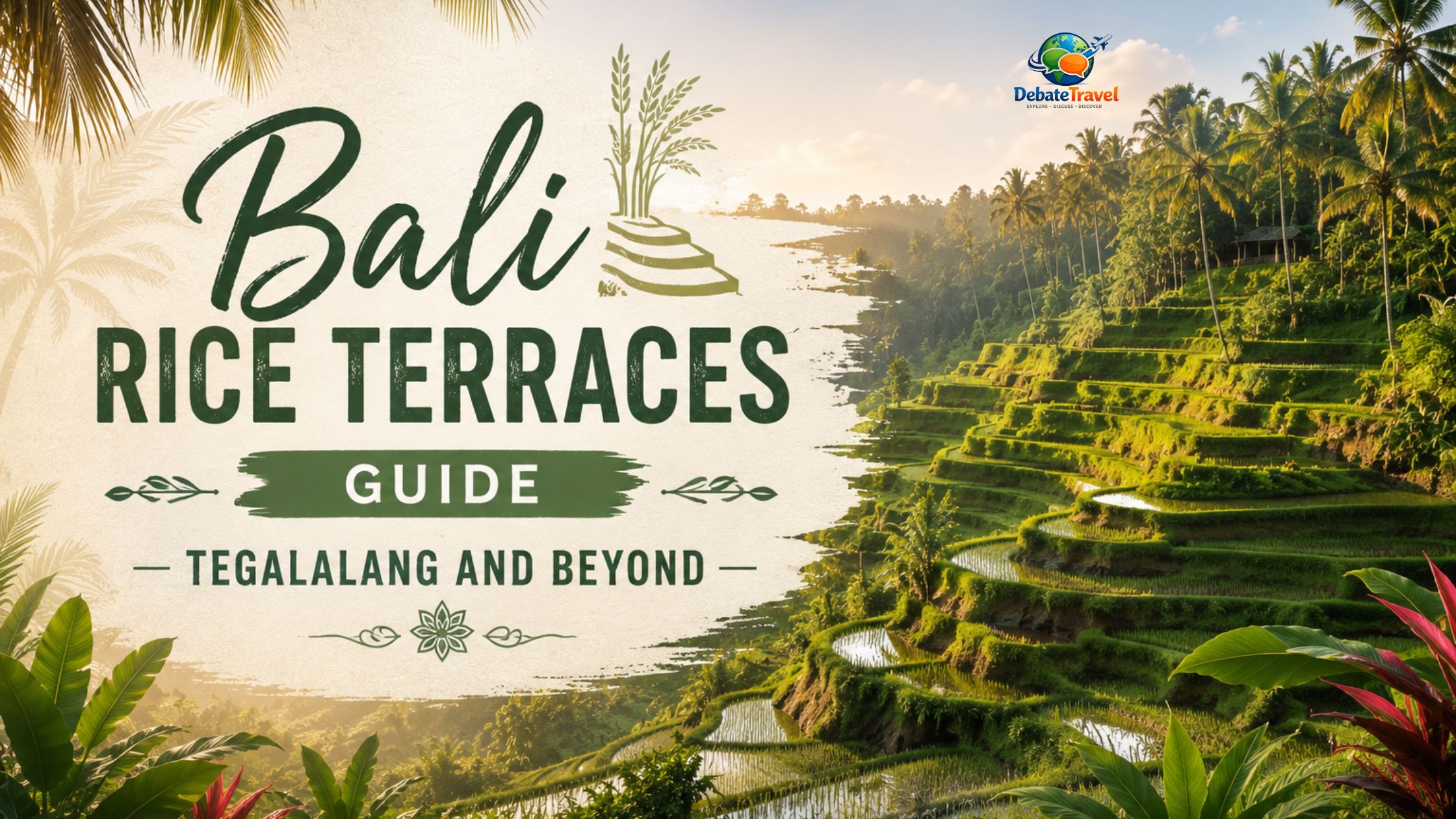
The image of bright green rice paddies cascading down a hillside in perfect tiers is one of the most iconic visuals of Bali. These Bali rice fields are not just beautiful, they represent a centuries-old irrigation system called Subak that UNESCO recognizes as a masterpiece of traditional engineering and spiritual philosophy.
This complete Bali rice terraces guide covers the famous Tegalalang rice terrace, the UNESCO-listed Jatiluwih rice terrace, and several other stunning rice terraces across the island, with practical advice on timing, costs, and what makes each one special.
Understanding the Subak System
Before exploring individual Bali rice fields, it helps to understand the Subak system that makes them possible. Subak is a traditional Balinese irrigation cooperative dating back over 1,000 years, in which farmers share water resources through an intricate network of canals, tunnels, and weirs governed by local temples.
The system is deeply tied to Balinese Hindu philosophy, particularly the concept of Tri Hita Karana, which emphasizes harmony between humans, nature, and the spiritual realm. This is why so many Bali rice fields are dotted with small temples and shrines where farmers make offerings before planting and harvesting.
In 2012, UNESCO recognized the Subak system and several associated rice terrace landscapes as a World Heritage Site, making this one of the most culturally significant agricultural traditions anywhere in the world.
Top Bali Rice Terraces to Visit
1. Tegalalang Rice Terrace
The Tegalalang rice terrace is the most famous and most visited of all Bali rice fields. Located about 15 minutes north of Ubud, these stepped paddies cascade down a steep valley in a pattern that has become one of the defining images of Bali itself.
The best time to visit the Tegalalang rice terrace is early morning, ideally before 8 AM, to avoid both the crowds and the intense midday heat. A network of pathways allows you to walk directly through the terraces, and several swing and zipline operators have set up along the cliff edge for those wanting an extra thrill with their photos.
Small cafes perched along the rim of the valley offer coffee and food with sweeping views over the rice fields, making it easy to spend an hour or two simply soaking in the scenery.
Entry fee: Small local donation, typically $1 to $2 Best time: Early morning (7 AM to 9 AM)
2. Jatiluwih Rice Terrace
The Jatiluwih rice terrace is the official UNESCO-listed centerpiece of Bali’s rice terrace heritage and, in the opinion of many travelers, even more spectacular than Tegalalang. Located in the foothills of Mount Batukaru in West Bali, Jatiluwih (which translates to “truly beautiful”) spans a vast area of rolling, layered rice fields stretching toward the mountains.
Unlike the more commercialized Tegalalang rice terrace, Jatiluwih remains a working agricultural landscape with far fewer tourists. Walking trails wind through the terraces for several kilometers, offering a much more immersive and peaceful experience of this Bali UNESCO rice terrace.
This is the top recommendation in this Bali rice terraces guide for travelers who want authenticity and scale over convenience.
Entry fee: Approximately $2 to $3 Best time: Mid-morning, after the mist clears but before the afternoon heat
3. Sidemen Rice Terrace
The rice terraces around Sidemen in East Bali offer some of the most dramatic scenery among all Bali rice fields, largely because of the backdrop: Mount Agung rises directly behind the terraced paddies, creating one of the most photogenic combinations of volcano and rice field anywhere on the island.
Sidemen receives a fraction of the tourists that visit Tegalalang, making it ideal for travelers seeking a quieter, more contemplative rice terrace experience. Several guesthouses and eco-resorts in the area offer rooms with direct views over the terraces toward the volcano.
Entry fee: Free in most areas (some private viewpoints charge a small donation) Best time: Early morning for the clearest views of Mount Agung before clouds gather
4. Belimbing Rice Terrace
Belimbing, located in the Tabanan regency between Ubud and Jatiluwih, is one of the most underrated Bali rice fields in this guide. The terraces here stretch across rolling hills with views toward Mount Batukaru, and the area receives very few tourists compared to Tegalalang or even Jatiluwih.
Belimbing is a great stop for travelers heading toward Jatiluwih or Bedugul who want an additional, less crowded rice terrace experience along the way.
Entry fee: Free or small donation Best time: Morning
5. Pupuan Rice Terraces
Pupuan, in the hills of North-West Bali, offers a cooler climate and a different character of rice terrace landscape compared to the central Bali fields. The terraces here are interspersed with coffee and clove plantations, creating a more diverse agricultural landscape than the pure rice monoculture found at Tegalalang.
This is one of the more remote entries in this Bali rice terraces guide and rewards travelers willing to venture further off the typical tourist route.
Entry fee: Free Best time: Morning, year-round given the cooler highland climate
6. Ceking Rice Terrace
Located close to Tegalalang, the Ceking rice terrace offers a similar dramatic cascading landscape with noticeably fewer tourists. Many travelers combine a visit to Ceking with Tegalalang as the two are only a short distance apart, allowing for a comparison of two stunning examples of Bali rice fields without significant extra travel time.
Entry fee: Small donation Best time: Early morning
Bali Rice Terraces Guide: Tegalalang vs Jatiluwih
One of the most common questions for travelers planning their Bali rice terraces guide itinerary is whether to visit Tegalalang, Jatiluwih, or both.
Tegalalang rice terrace is more accessible (15 minutes from Ubud), more developed with cafes and swing operators, and more crowded, especially after 9 AM. It is best for travelers with limited time who want the classic Bali rice field photo with minimal effort.
Jatiluwih rice terrace requires more travel time (about 1.5 hours from Ubud) but offers a more authentic, expansive, and peaceful experience as the official UNESCO-listed site. It is best for travelers who have a full day to dedicate to West Bali and want a deeper, quieter connection with the landscape.
If your schedule allows, visiting both gives you a complete picture of Bali’s rice terrace heritage: the postcard view at Tegalalang and the genuine UNESCO-listed grandeur at Jatiluwih.
Tips for Visiting Bali Rice Fields
Wear comfortable, closed walking shoes. The paths through Bali rice fields can be muddy, narrow, and uneven, particularly after rain.
Visit early morning. Not only does this avoid crowds and heat, the soft morning light is also the most flattering for photography across every rice terrace in this guide.
Respect the working farmland. These are active agricultural sites, not theme parks. Stay on designated paths, do not damage the rice plants, and be mindful of farmers working in the fields.
Bring cash for small entry donations. Most Bali rice terraces operate on a small donation system rather than a fixed ticket price, and card payments are rarely accepted.
Combine with nearby attractions. Tegalalang pairs well with a day trip covering the Sacred Monkey Forest and Ubud town. Jatiluwih pairs well with Ulun Danu Beratan temple and the Bedugul highlands.
Frequently Asked Questions
Q: Is Tegalalang or Jatiluwih better?
Tegalalang rice terrace is more convenient and accessible from Ubud but more crowded. Jatiluwih rice terrace is the official UNESCO-listed site, larger in scale, and significantly less crowded, though it requires more travel time. Many travelers in this Bali rice terraces guide recommend Jatiluwih for a more authentic experience if time permits.
Q: What is the best time to visit the Tegalalang rice terrace?
Early morning, between 7 AM and 9 AM, is the best time to visit the Tegalalang rice terrace. This avoids both the worst of the crowds and the intense midday heat.
Q: How much does it cost to enter Bali rice fields?
Most Bali rice terraces operate on a small donation system, typically $1 to $3 per person. Jatiluwih rice terrace, as the official UNESCO site, has a slightly more formalized entry fee.
Q: Why is Jatiluwih called a UNESCO rice terrace?
The Jatiluwih rice terrace is part of the broader Subak irrigation system that UNESCO recognized as a World Heritage Site in 2012, honoring the centuries-old Balinese cooperative water management tradition and its deep ties to Hindu philosophy.
Q: Are the swings at Tegalalang worth it?
The swings and ziplines at the Tegalalang rice terrace are optional extras that cost $5 to $15 depending on the operator and offer a fun, photogenic experience over the rice paddies. They are not essential to enjoying the landscape but are popular for photography.
Q: Can I walk through the rice terraces myself?
Yes. Most Bali rice fields, including Tegalalang, Jatiluwih, and Sidemen, have walking paths that allow visitors to explore independently. Always stay on designated paths to respect the working farmland.