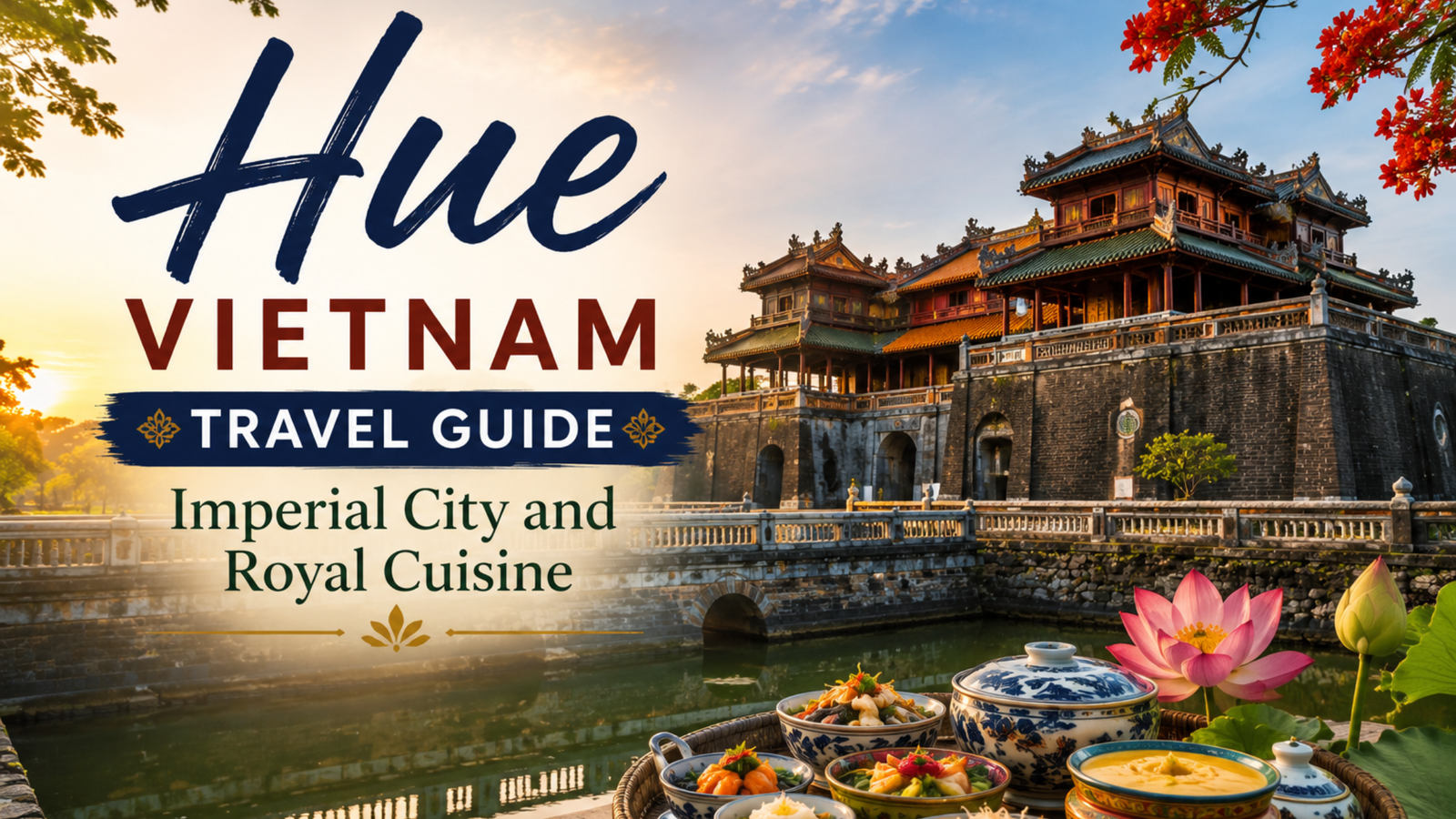
Hue is one of Vietnam’s most historically layered and culturally distinctive cities, serving as the seat of the Nguyen dynasty and the imperial capital of Vietnam for over 140 years until 1945. Today, the former royal city sits on the banks of the Perfume River in central Vietnam, its imperial monuments and unique cuisine drawing travelers who want to understand a side of the country that goes far deeper than beaches and street food markets.
This complete Hue Vietnam guide covers the essential things to do Hue has on offer, the remarkable Hue imperial city complex, the royal tombs scattered across the surrounding hills, authentic Hue cuisine, and practical Hue travel tips for planning your visit.
Why Visit Hue Vietnam
Hue occupies a unique position in Vietnamese history and culture. As the imperial capital during the Nguyen dynasty, the city developed an extraordinary tradition of royal cuisine, refined craftsmanship, traditional music, and architectural grandeur that sets it apart from every other Vietnamese city.
Despite suffering significant destruction during the Tet Offensive of 1968, the Hue imperial city and its associated monuments have been progressively restored and are now among the most significant UNESCO World Heritage Sites in Southeast Asia.
Hue Imperial City (The Citadel)
The Hue imperial city, also known as the Imperial Citadel or the Forbidden Purple City, is the centerpiece of any visit Hue Vietnam itinerary. Modeled partly on the Forbidden City in Beijing, the complex covers over 500 hectares and is enclosed by a moat and 10-kilometer defensive wall.
The main entrance through the Flag Tower and the Noon Gate (Ngo Mon) leads into the Outer Court, where the Thai Hoa Palace served as the setting for royal audiences. Beyond lies the Inner Court and the Forbidden Purple City, where the Emperor and his immediate family lived in privacy.
Much of the original complex was destroyed during the wars of the 20th century, but ongoing restoration has returned significant portions of the Hue imperial city to their former grandeur. Walking through the grounds, particularly at dawn before the tour groups arrive, is one of the most atmospheric experiences in this Hue Vietnam guide.
Entry fee: Approximately $5 per person Opening hours: 8 AM to 5:30 PM daily
Royal Tombs: The Hills South of Hue
The royal tombs of the Nguyen emperors, scattered across the forested hills south of the city along the Perfume River, are among the most beautifully positioned and architecturally extraordinary monuments in Vietnam.
Tomb of Tu Duc
The most visited and most beautiful of all the tombs in this Hue Vietnam guide, the Tomb of Tu Duc (reigned 1847 to 1883) is a complex of pavilions, ponds, gardens, and residential buildings that Emperor Tu Duc used as a personal retreat during his lifetime. The setting within a pine forest beside a lotus pond creates a genuinely meditative atmosphere.
Tomb of Minh Mang
The most formal and architecturally balanced of the royal tombs, the Tomb of Minh Mang (reigned 1820 to 1841) features a symmetrical layout of gates, pavilions, lakes, and the burial mound itself, reflecting the Confucian emphasis on order and harmony.
Tomb of Khai Dinh
The most dramatically different of all the royal tombs and one of the most visually striking monuments in this Hue Vietnam guide, the Tomb of Khai Dinh (reigned 1916 to 1925) blends Vietnamese, Chinese, French, and even Gothic architectural influences into a single extraordinary hillside structure, lavishly decorated with glass and ceramic mosaics.
Entry fees: Approximately $5 per tomb or combined ticket approximately $10
Thien Mu Pagoda
One of the most famous religious landmarks in all of Vietnam, the seven-storey Thien Mu Pagoda sits on a hilltop overlooking the Perfume River about 5 kilometers from the city center. The octagonal tower has become an unofficial symbol of Hue and is best visited by renting a bicycle or motorbike along the scenic riverside road.
Hue Cuisine: Royal Food of Vietnam
Hue cuisine is widely considered the most complex and refined of all Vietnamese regional cooking traditions, developed over centuries to satisfy the demanding standards of royal court dining. This aspect of visiting Hue Vietnam is as culturally significant as the historical monuments.
Bun Bo Hue
The most famous of all Hue cuisine dishes, Bun Bo Hue is a fiery lemongrass-infused beef and pork broth served with thick round noodles, sliced beef shank, pork knuckle, and blood cake. The spice level is significantly higher than pho Vietnam, and the flavor complexity is extraordinary.
Banh Khoai
Hue’s version of the Vietnamese sizzling crepe, Banh Khoai is smaller and crispier than the southern Banh Xeo, served with a unique sesame and peanut sauce specific to central Vietnamese cooking.
Com Hen (Baby Clam Rice)
Cold rice topped with tiny river clams and surrounded by as many as 20 different accompaniments including pork rinds, star fruit, pickled vegetables, and shrimp paste, Com Hen is one of the most complex and uniquely Hue cuisine dishes in the country.
Banh Beo
Small steamed rice flour cakes topped with shrimp, crispy shallots, and pork rinds, served on tiny saucers with a light dipping sauce. Banh Beo is a beloved Hue snack available throughout the city.
Where to Eat in Hue
Dong Ba Market near the Citadel offers the most concentrated and affordable access to authentic Hue cuisine street food. The restaurant strip along Pham Ngu Lao Street offers a range of Hue dishes in comfortable sit-down settings. For a more formal royal cuisine experience, several Hue restaurants offer imperial set menus featuring dishes served in the traditional court style.
Hue Travel Tips: Practical Advice
Getting Around
Hue is well-suited to exploration by bicycle ($2 to $3 per day), which allows leisurely exploration of the Citadel, riverside roads, and the pagodas scattered along the Perfume River. The royal tombs to the south are best reached by motorbike ($5 to $8 per day rental) or organized half-day tour, as they are spread across a wider area.
Timing
Hue’s wet season (September to November) brings heavy rainfall and occasional flooding. The best months for visiting Hue Vietnam are January to August, with February to April particularly pleasant.
Day Trip from Da Nang
Many travelers visit Hue as a day trip from Da Nang (approximately 2 hours north by car), passing through the stunning Hai Van Pass along the coast. However, spending 2 nights in Hue allows far more thorough exploration of the imperial monuments and cuisine.
Sample Hue Itinerary: 2 Days
| Day | Focus |
|---|---|
| Day 1 | Imperial Citadel, Dong Ba Market, Bun Bo Hue dinner |
| Day 2 | Thien Mu Pagoda, Tomb of Tu Duc, Tomb of Minh Mang, Tomb of Khai Dinh |
Frequently Asked Questions
Q: How many days should I spend in Hue?
2 days covers the main Hue imperial city, the most important royal tombs, and a proper introduction to Hue cuisine. A third day allows for deeper exploration and a day trip along the Perfume River.
Q: Is Hue worth visiting?
Yes, strongly. Hue offers a depth of historical and cultural experience unlike any other city in Vietnam, and its royal cuisine tradition is one of the most distinctive and rewarding food experiences in the country.
Q: What is Hue cuisine known for?
Hue cuisine is known for being the spiciest and most complex of all Vietnamese regional cooking traditions, developed over centuries of royal court dining. Key dishes include Bun Bo Hue, Banh Khoai, Com Hen, and Banh Beo.
Q: How do I get from Da Nang to Hue?
By car or motorbike via the scenic Hai Van Pass (approximately 2 hours), or by train (approximately 2.5 hours on the coastal route).
Q: Is the Hue Imperial Citadel worth the entry fee?
Yes. The Hue imperial city complex is one of the most significant historical monuments in Vietnam and justifies a full half-day of exploration.