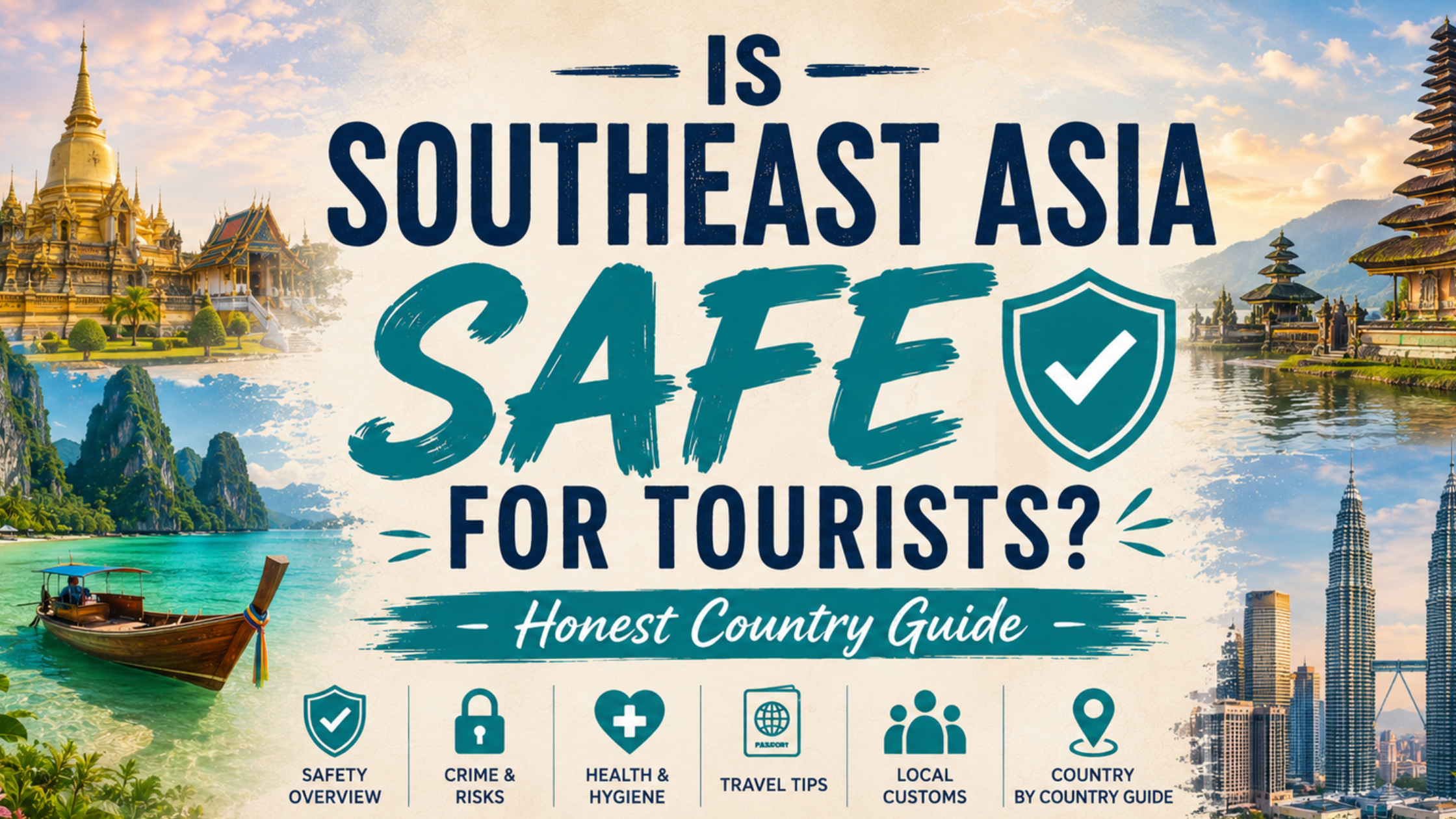
Is Southeast Asia safe? It is the question asked by almost every first-time visitor planning a trip to the region, and the honest answer is: yes, overwhelmingly so. Southeast Asia is home to some of the safest and most tourist-friendly destinations in the world, and the millions of travelers who visit Thailand, Vietnam, Malaysia, and Bali every year return home with the overwhelming majority of experiences being positive, memorable, and incident-free.
That said, no destination is without real risks, and this honest Southeast Asia safety guide covers what those risks actually are, how to manage them, and what to be genuinely aware of in each country.
Is Southeast Asia Safe Overall?
Southeast Asia generally has a low rate of violent crime against tourists. The most common safety issues travelers encounter across the region are:
Petty theft (bag snatching, pickpocketing in crowded markets). Scooter and road traffic accidents (the most significant cause of tourist injuries). Common tourist scams around overcharging, fake tours, and gem shops. Drink spiking in nightlife areas of major tourist destinations.
None of these are unique to Southeast Asia, and all are manageable with basic awareness and common-sense precautions.
Thailand Safety Guide
Thailand is one of the most visited countries in the world for good reason: it is generally safe, well-set-up for tourists, and the vast majority of visitors have trouble-free trips.
Real Safety Considerations in Thailand
Road safety is the most significant issue. Thailand has high road traffic accident rates, and scooter accidents involving tourists are common across the southern islands, Chiang Mai, and Koh Samui. Always wear a helmet, never ride after drinking, and only rent a scooter if you have genuine riding experience.
Tuk-tuk scams in Bangkok target new arrivals. Anyone near major temples telling you the site is “closed today” and offering to take you elsewhere for free is running a scam. Ignore them and proceed to the site.
Drink spiking has been reported in nightlife areas of Patong (Phuket) and Khao San Road (Bangkok). Never leave your drink unattended.
Lèse-majesté laws (protection of the monarchy) are enforced seriously. Never make negative comments about the royal family in any context.
Overall verdict: Thailand is safe. Exercise standard urban awareness and road safety.
Vietnam Safety Guide
Vietnam is one of the safer countries in Southeast Asia for tourists, with a low rate of violent crime and a generally welcoming attitude toward foreign visitors.
Real Safety Considerations in Vietnam
Motorbike bag snatching occurs occasionally in Ho Chi Minh City and Hanoi, primarily targeting tourists walking while carrying bags loosely over one shoulder. Carry bags across the body and be aware on busy streets.
Traffic in Hanoi and Ho Chi Minh City is intense and crossing the road requires patience and a slow, steady approach.
Scams targeting tourists around taxi and cyclo rides are common in the Old Quarters of both major cities. Use Grab for all transport and agree fares clearly before any unlicensed vehicle journey.
Overall verdict: Vietnam is safe. Main risks are petty theft and traffic rather than violent crime.
Malaysia Safety Guide
Malaysia is one of the safest countries in Southeast Asia, with a generally low crime rate, a stable political environment, and an extremely welcoming attitude toward tourists.
Real Safety Considerations in Malaysia
Petty theft in crowded areas of KL (Petaling Street, busy tourist markets) is the most common issue. Standard bag awareness applies.
Kuala Lumpur and Penang are very safe for solo travelers including women, with a well-developed urban environment and English widely spoken throughout.
Road safety is important when renting scooters in Langkawi or Penang. Helmet use is legally required.
Overall verdict: Malaysia is one of the safest Southeast Asian countries. Standard urban precautions apply.
Bali Safety Guide
Bali is generally very safe for tourists and is one of the most visited destinations in Southeast Asia without significant safety concerns for most travelers.
Real Safety Considerations in Bali
Scooter accidents are the leading cause of tourist injuries in Bali, with roads that can be narrow, busy, and unpredictable. Never ride without a helmet, always carry your International Driving Permit, and never ride after drinking.
Petty theft (bag snatching from scooters in busy areas) occurs occasionally. Keep bags on your lap rather than hanging from shoulders when walking.
Drink spiking has been reported in certain Kuta and Canggu nightlife venues. Never leave drinks unattended.
Bali’s Hindu culture and active temple community means most interactions with locals are warm and positive.
Overall verdict: Bali is safe. Scooter safety is the most important practical concern.
Safe Travel Southeast Asia: Universal Tips
Download Grab before arriving in every country. It eliminates the risk of overcharging from unlicensed taxis and provides safe, trackable transport at any hour.
Always wear a helmet on scooters and never ride under the influence of alcohol. This single precaution eliminates the most significant safety risk across the entire region.
Be aware in crowded markets, busy streets, and tourist areas. Keep bags on your body rather than loosely hanging, and do not leave valuables in obvious places.
Book accommodation with good reviews. Reputable guesthouses and hostels with strong review profiles offer a safety baseline and reliable local advice about current conditions.
Get comprehensive travel insurance before you go, specifically covering scooter accidents and medical evacuation, as standard policies sometimes exclude these.
Trust your instincts. Most interactions in Southeast Asia are genuinely positive. If a situation feels uncomfortable or an offer seems too good to be true, it probably is.
Is Southeast Asia Safe for Solo Travelers?
Yes, generally. All four countries covered in this SEA safety guide are popular solo travel destinations, including for women traveling alone. The large backpacker infrastructure in Thailand and Bali means solo travelers are rarely actually alone. Vietnam and Malaysia both have established solo traveler networks in major cities and tourist areas.
Solo female travelers should exercise the same common-sense precautions that apply in any urban environment worldwide, particularly around nightlife situations and accepting drinks from strangers.
Frequently Asked Questions
Q: Is Southeast Asia safe to travel in 2026? Yes. Southeast Asia remains one of the world’s most visited and generally safe travel regions. Violent crime against tourists is rare across all four major destinations covered in this SEA safety guide.
Q: What is the biggest safety risk in Southeast Asia? Road traffic accidents, particularly involving scooters, are statistically the most significant safety risk for tourists across Thailand, Vietnam, Malaysia, and Bali. Wearing a helmet, not riding after drinking, and exercising appropriate caution on mountain and island roads dramatically reduces this risk.
Q: Is Bali safe for women traveling alone? Yes. Bali is one of the more female-friendly solo travel destinations in Southeast Asia. Standard urban awareness precautions apply, particularly in nightlife settings.
Q: Is Thailand safe for first-time travelers? Yes. Thailand is one of the most visited and most tourist-friendly countries in the world. The main precautions (scooter safety, avoiding scams near major temples, drink awareness in nightlife areas) are manageable with basic research.