
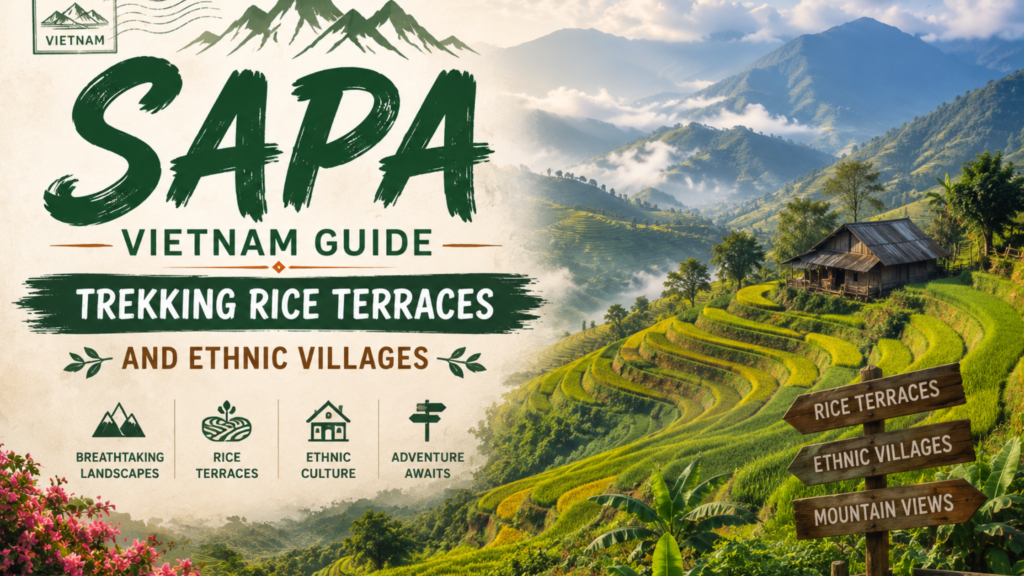
Sapa is one of the most visually spectacular destinations in all of Vietnam, a highland town in the Lao Cai province of the far northwest, sitting at 1,500 metres above sea level and surrounded by some of the most dramatic terraced rice field landscapes in Southeast Asia. This complete Sapa Vietnam travel guide covers everything you need to know about visiting Sapa, from planning your Sapa trekking guide itinerary to understanding the ethnic minority communities who make the region so culturally distinctive.
Why Visit Sapa
The Sapa rice terraces are the primary draw: cascading layers of cultivated paddies carved into steep mountain slopes by the hands of the Black Hmong and Red Dao ethnic communities over centuries of agricultural life. During the growing season (June to September), these terraces turn a vivid shade of green that photographs have made famous worldwide. During harvest (September to October), they shift to breathtaking gold before the cycle begins again.
Beyond the landscape, visiting Sapa means engaging with Vietnam’s ethnic minority culture at its most visible and accessible. The Black Hmong women who come to Sapa town in their distinctive indigo-dyed traditional clothing, the Red Dao with their distinctive red headdresses, and several other minority groups have inhabited these mountains for centuries.
Sapa Rice Terraces: The Best Viewpoints
Muong Hoa Valley
The Muong Hoa Valley is the most famous and most photographed of all the Sapa rice terraces landscapes, stretching for approximately 8 kilometers through a succession of villages with uninterrupted terrace views. The valley is best explored on foot along the valley floor trail, typically covered as part of a trekking itinerary.
Cat Cat Village
Cat Cat is the most accessible village from Sapa town, about 2 kilometers downhill, and offers a gentle introduction to Black Hmong culture with traditional architecture, a waterfall, and sweeping terrace views. The village has become quite commercialized but remains a worthwhile first stop for those new to visiting Sapa.
Lao Chai and Ta Van
These two villages in the Muong Hoa Valley offer a more authentic and less visited experience than Cat Cat, with genuine farming communities, traditional architecture, and some of the finest Sapa rice terraces viewpoints accessible during a moderate trekking day.
Ham Rong Mountain
A peak above Sapa town itself offering panoramic views across the valley and on clear days, toward Fansipan, Vietnam’s highest mountain at 3,143 metres.
Sapa Trekking Guide: What to Expect
Trekking in Sapa ranges from easy valley walks suitable for beginners to challenging multi-day mountain routes requiring good fitness and experience.
Easy Treks
The Muong Hoa Valley walk (approximately 10 to 15 kilometers) follows relatively flat paths through rice fields and village settlements, manageable for most visitors with basic fitness. This is the most popular route in this Sapa trekking guide and can be completed in a single day.
Moderate Treks
Routes connecting Lao Chai, Ta Van, Giang Ta Chai, and Baan Ho involve more elevation change and typically take a full day or are done as a 2-day overnight homestay trek. These routes offer significantly more authentic and secluded experiences than the busier easy routes.
Fansipan Summit
Climbing Fansipan, the “Roof of Indochina,” is the most ambitious trekking challenge in this Sapa trekking guide. The trail takes 2 to 3 days and requires good fitness and appropriate equipment. Alternatively, a cable car from Sapa town reaches a station near the summit in approximately 20 minutes for those wanting the views without the climb.
Ethnic Villages: Engaging with Local Culture
The ethnic minority communities around Sapa are the living cultural heart of any Sapa Vietnam trip. The Black Hmong, Red Dao, Tay, and Giay peoples each have distinct languages, traditional clothing, and customs that have survived relatively intact in these remote highlands.
Hiring a local ethnic minority guide rather than a town-based operator is strongly recommended in this Sapa Vietnam travel guide, both for the quality of cultural insight they provide and for ensuring that more of your spending benefits the communities directly.
Homestays in villages along the Muong Hoa Valley or in Ta Van offer the most genuine and immersive way to experience local life, with hosts typically providing simple meals and basic accommodation for $10 to $20 per person per night.
Ha Giang: The Ultimate Northern Vietnam Extension
If Sapa sparks your interest in northern Vietnam’s highland scenery and ethnic minority culture, the Ha Giang Loop is the natural next step in any serious Sapa Vietnam trip extension. Located approximately 4 to 5 hours north of Sapa, Ha Giang is Vietnam’s northernmost province and home to the most dramatic mountain loop road in the country.
The Ha Giang Loop covers approximately 350 kilometers of mountain roads over 3 to 4 days, passing through the Dong Van Karst Plateau Geopark (UNESCO listed), Meo Vac, Ma Pi Leng Pass (considered the most scenic mountain pass in Vietnam), and dozens of remote ethnic minority villages. It is best done by renting an easy rider motorbike with a local driver guide or on your own motorbike with experience of mountain roads.
Ha Giang is increasingly popular among adventurous travelers and has been consistently rated as one of the most spectacular overland journeys in Southeast Asia.
Getting to Sapa
The most popular route for a Sapa Vietnam trip from Hanoi is the overnight train to Lao Cai (approximately 8 to 9 hours) followed by a 30 to 45 minute bus or taxi transfer to Sapa town. Trains depart Hanoi in the evening and arrive in Lao Cai early morning, saving a night of accommodation.
Alternatively, buses and minivans from Hanoi’s My Dinh Bus Station reach Sapa in approximately 5 to 6 hours on the expressway, a faster but less atmospheric option.
Best Time to Visit Sapa
September and October offer the most spectacular rice harvest scenery, when the terraces turn golden before cutting. May to June shows the new planting season with vivid green terraces. December to February brings cold temperatures and occasional snow, creating a dramatically different but beautiful atmosphere. March and April can be foggy and rainy, reducing visibility for trekking.
Sample Sapa Vietnam Trip Itinerary
| Day | Focus |
|---|---|
| Day 1 | Arrive from Hanoi, Sapa town orientation, Cat Cat Village |
| Day 2 | Full-day Muong Hoa Valley trek, Lao Chai and Ta Van |
| Day 3 | Homestay or village exploration, Fansipan cable car |
| Day 4 | Return to Hanoi or continue to Ha Giang |
Frequently Asked Questions
Q: Do I need a guide for Sapa trekking?
A local ethnic minority guide is strongly recommended for the most rewarding experience, providing cultural context, trail navigation in rural areas, and ensuring your spending benefits local communities directly.
Q: What is the best time to visit Sapa for rice terrace scenery?
September to October for golden harvest terraces and May to June for vivid green planting season are the most photogenic times according to any Sapa Vietnam travel guide.
Q: How do I get from Hanoi to Sapa?
The overnight train to Lao Cai followed by a short transfer to Sapa is the most popular and atmospheric option for a Sapa Vietnam trip from the capital.
Q: Is Ha Giang better than Sapa?
Ha Giang offers more remote and dramatic mountain scenery with fewer tourists, while Sapa is more accessible with better tourism infrastructure. Many experienced travelers rate Ha Giang higher for overall landscape drama, while Sapa is more practical for first-time visitors to northern Vietnam.
Q: Can beginners trek in Sapa?
Yes. The Muong Hoa Valley routes covered in this Sapa trekking guide are accessible to most visitors with basic fitness. Harder routes like the Fansipan summit trail require significantly more experience and preparation.