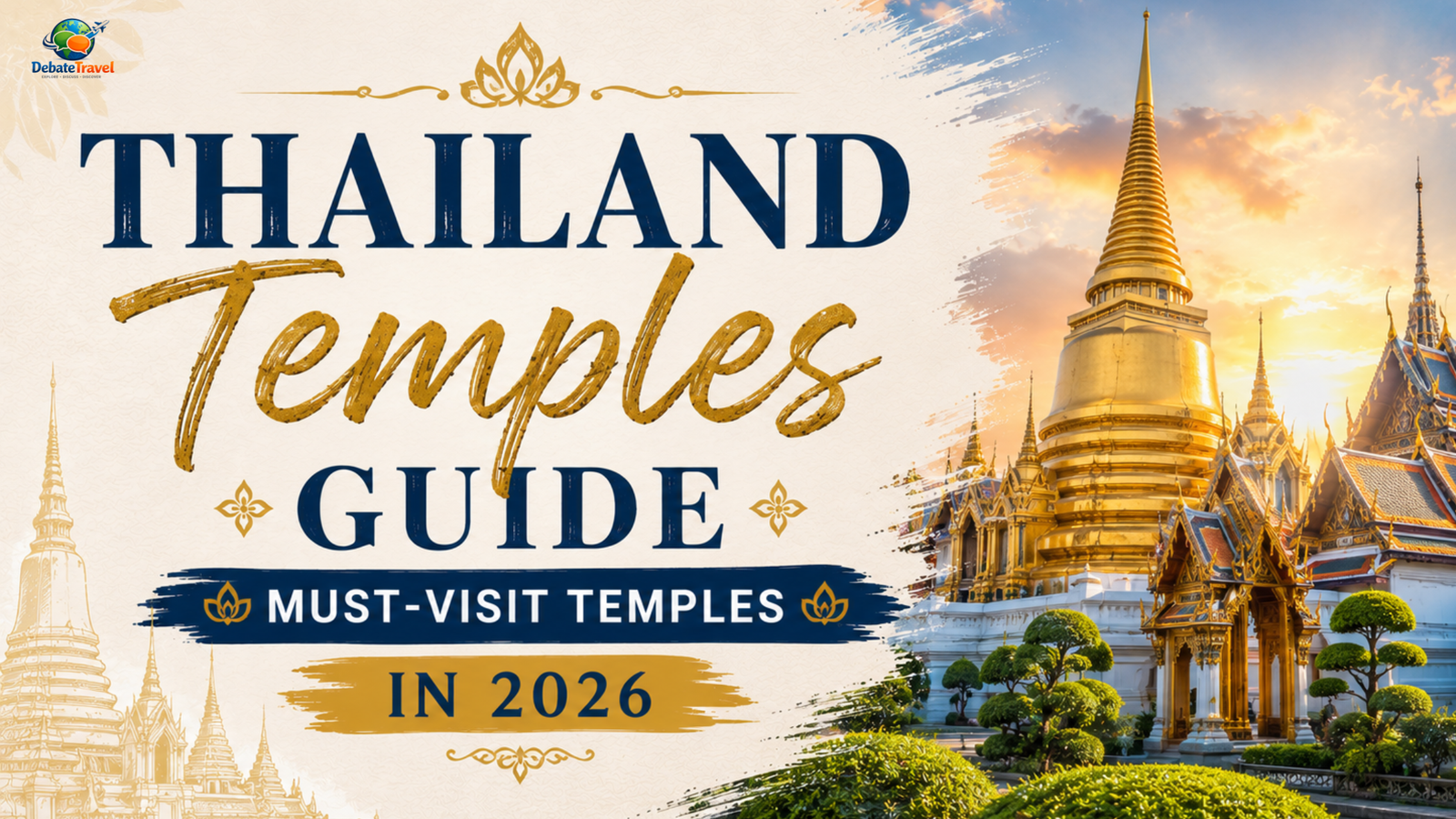
Thailand is home to some of the most magnificent Buddhist temples in the world, spanning centuries of craftsmanship, spiritual devotion, and architectural brilliance. From the gilded spires of Bangkok’s royal temples to the mountainside sanctuaries of Chiang Mai, this complete Thailand temples guide covers the best temples Thailand has to offer in 2026, with practical tips on timing, entry fees, and what makes each one special.
What to Know Before Visiting Thailand’s Temples
Before exploring the best temples Thailand has, there are a few essential cultural and practical points for your Thailand temple guide visit.
Dress modestly at all temples: covered shoulders and knees are required. Most major temples sell or rent appropriate cover-ups at the entrance for a small fee. Remove your shoes before entering any temple building. Never point your feet toward Buddha images or monks, as this is considered deeply disrespectful. Maintain a quiet, respectful demeanor throughout your visit. Women should never touch or hand anything directly to a monk.
Best Temples Thailand: Bangkok
1. Wat Pho Bangkok
Wat Pho Bangkok is one of the oldest, largest, and most significant temples in all of Thailand, and an essential first stop in any Thailand temples guide focused on Bangkok. The temple is most famous for housing the enormous Reclining Buddha, a 46-metre long, 15-metre high gilded statue that fills an entire hall and is one of the most impressive religious sculptures in Southeast Asia.
Beyond the Reclining Buddha, Wat Pho Bangkok is also considered the birthplace of traditional Thai massage, with a massage school and clinic operating on the temple grounds, where you can book a session after sightseeing.
Entry fee: Approximately $5 per person Opening hours: 8 AM to 6:30 PM daily Location: Adjacent to the Grand Palace, Rattanakosin Island
2. Grand Palace and Wat Phra Kaew
While the Grand Palace itself is a royal complex rather than a temple, the Wat Phra Kaew (Temple of the Emerald Buddha) within its grounds is the most sacred Buddhist site in Thailand and an indispensable entry in any Thailand temples guide. The Emerald Buddha, a small but profoundly revered jade statue dressed in seasonal royal robes changed by the King himself three times a year, sits in an ornate golden throne hall surrounded by breathtaking murals depicting the Ramayana epic.
The entire Grand Palace complex is among the most visited attractions in Southeast Asia, so arriving early (by 8 AM) is strongly recommended to avoid the largest tour groups.
Entry fee: Approximately $15 per person (combined Grand Palace and Wat Phra Kaew) Opening hours: 8:30 AM to 3:30 PM daily
3. Wat Arun (Temple of Dawn)
Wat Arun Bangkok stands on the west bank of the Chao Phraya River and is one of the most recognizable landmarks in the city, its distinctive porcelain-covered prangs (towers) best viewed from across the river at sunset when the light catches the intricate mosaic surface. The central prang rises 70 metres and offers panoramic views from its steep stairs.
Wat Arun is one of the best temples Thailand offers for photography, particularly at golden hour, and a short ferry ride from Wat Pho makes visiting both in a single morning very manageable.
Entry fee: Approximately $3 per person Opening hours: 8 AM to 6 PM daily
4. Wat Benchamabophit (Marble Temple)
Built in 1899 during the reign of King Rama V, Wat Benchamabophit is constructed almost entirely of Italian Carrara marble and combines European and Thai architectural elements in a uniquely elegant way. The temple houses a collection of 53 Buddha images from different Asian countries and periods, making it one of the most architecturally and artistically distinctive best temples Thailand has in Bangkok.
Entry fee: Approximately $2 per person Opening hours: 8 AM to 5:30 PM daily
5. Wat Saket (Golden Mount)
Wat Saket sits atop an artificial hill known as the Golden Mount, offering panoramic views across Bangkok from a golden chedi at the summit. The 300-step climb through a wooded hillside with bells, flags, and prayer ribbons is a meditative experience quite different from the more formal temple visits covered elsewhere in this Thailand temple guide.
Entry fee: Approximately $2 per person Opening hours: 7:30 AM to 5:30 PM daily
Best Temples Thailand: Chiang Mai
6. Doi Suthep Chiang Mai (Wat Phra That Doi Suthep)
Doi Suthep Chiang Mai is the most iconic and most visited temple in northern Thailand, sitting at 1,073 metres above sea level on the slopes of Doi Suthep mountain overlooking the city. The temple is reached via a staircase of 309 steps flanked by carved naga serpent railings, or by a funicular for those preferring to avoid the climb.
The golden chedi at the summit and the panoramic views over Chiang Mai make Doi Suthep Chiang Mai one of the most memorable temple experiences in this entire Thailand temples guide. The site is deeply sacred and particularly vibrant during Buddhist festivals when pilgrims arrive in large numbers.
Entry fee: Approximately $2 per person Opening hours: 6 AM to 8 PM daily
7. Wat Chedi Luang
Wat Chedi Luang in the heart of Chiang Mai’s Old City houses the ruins of a massive chedi (pagoda) originally built in the 14th century and partially destroyed by an earthquake in 1545. The partially ruined structure has been thoughtfully preserved rather than over-restored, giving it a distinctly atmospheric character unlike the fully intact temples elsewhere in this Thailand temples guide.
The temple also houses the Lak Mueang (city pillar) and is the venue for the Monk Chat program, where visitors can converse with resident monks in English to learn about Buddhism and daily monastic life.
Entry fee: Approximately $1 per person Opening hours: 6 AM to 9 PM daily
8. Wat Phra Singh
Wat Phra Singh is one of the most important of all Chiang Mai temples and the finest example of classic northern Thai Lanna temple architecture. The temple’s beautifully decorated viharn (assembly hall) houses the venerated Phra Singh Buddha image, around which major religious ceremonies are centered during the Songkran (Thai New Year) festival every April.
Entry fee: Approximately $1 per person Opening hours: 6 AM to 9 PM daily
9. Wat Umong (Tunnel Temple)
Wat Umong is one of the most unusual and peaceful Chiang Mai temples, built around a network of ancient tunnels dating back to the 13th century where monks would once meditate in the cool darkness. The forest setting, lotus pond, and ruined chedi create an atmosphere that feels genuinely serene and removed from the tourist trail.
Entry fee: Free (donations welcome) Opening hours: 8 AM to 5 PM daily
Best Temples Thailand: Beyond Bangkok and Chiang Mai
10. Wat Phra Mahathat, Ayutthaya
One of the most iconic images in any Thailand temples guide is the stone Buddha head entwined in the roots of a bodhi tree at Wat Phra Mahathat in Ayutthaya. This 14th-century temple complex represents the glory of the ancient Ayutthaya kingdom and is a UNESCO World Heritage Site, easily visited as a day trip from Bangkok.
Entry fee: Approximately $2 per person Location: Ayutthaya Historical Park, 80 km north of Bangkok
11. Wat Rong Khun (White Temple), Chiang Rai
Wat Rong Khun is one of the most visually spectacular and unusual best temples Thailand has, a contemporary Buddhist artwork project by Thai artist Chalermchai Kositpipat, entirely covered in white plaster and mirrored glass that dazzles in the sunlight. The White Temple continues to be expanded and improved and has become one of the most photographed temples in the country.
Entry fee: Free (donations welcome) Opening hours: 8 AM to 5 PM daily Location: Chiang Rai, northern Thailand
12. Wat Phra That Lampang Luang
One of the oldest and best preserved Lanna-style temple complexes in northern Thailand, Wat Phra That Lampang Luang features beautiful gilded chedi, ancient wooden viharns, and an unusual camera obscura effect inside one of the temple buildings. This is a more off-the-beaten-path entry in this Thailand temples guide, rewarding travelers who venture beyond the most famous sites.
Entry fee: Free (donations welcome) Location: Lampang, between Chiang Mai and Chiang Rai
Thailand Temples Guide: Quick Reference
| Temple | Location | Entry Fee | Best For |
|---|---|---|---|
| Wat Pho Bangkok | Bangkok | $5 | Reclining Buddha, Thai massage |
| Grand Palace and Wat Phra Kaew | Bangkok | $15 | Most sacred site in Thailand |
| Wat Arun | Bangkok | $3 | Photography, sunset views |
| Wat Benchamabophit | Bangkok | $2 | Marble architecture |
| Wat Saket | Bangkok | $2 | Panoramic city views |
| Doi Suthep Chiang Mai | Chiang Mai | $2 | Mountain temple, city views |
| Wat Chedi Luang | Chiang Mai | $1 | Ruins, Monk Chat |
| Wat Phra Singh | Chiang Mai | $1 | Lanna architecture |
| Wat Umong | Chiang Mai | Free | Forest meditation tunnels |
| Wat Phra Mahathat | Ayutthaya | $2 | Tree-root Buddha head |
| Wat Rong Khun | Chiang Rai | Free | White Temple artwork |
| Wat Phra That Lampang Luang | Lampang | Free | Ancient Lanna complex |
Frequently Asked Questions
Q: What is the most famous temple in Thailand?
Wat Phra Kaew (Temple of the Emerald Buddha) within the Grand Palace complex in Bangkok is the most sacred and most visited temple in Thailand, essential for any Thailand temples guide.
Q: What is the dress code for Thailand temples?
Covered shoulders and knees are required at all temples in Thailand. Most major temples provide sarongs or cover-ups at the entrance for a small fee, making it easy to comply even without planning ahead.
Q: Is Doi Suthep Chiang Mai worth visiting?
Yes, absolutely. Doi Suthep Chiang Mai is one of the most spiritually significant and visually stunning temples in northern Thailand, and the panoramic views over Chiang Mai from the summit add considerable value to the visit.
Q: What is the difference between Wat Pho Bangkok and the Grand Palace?
Wat Pho Bangkok is a separate temple complex best known for the Reclining Buddha and traditional Thai massage school. The Grand Palace is the former royal residence complex that houses Wat Phra Kaew, the most sacred temple in Thailand. Both are located close together in Bangkok’s Rattanakosin district and are usually visited on the same day.
Q: Is the White Temple (Wat Rong Khun) worth the trip to Chiang Rai?
Yes for many travelers, though it requires a half-day journey from Chiang Mai. The temple’s extraordinary visual impact and ongoing artistic development make it one of the most unique and memorable best temples Thailand has to offer.