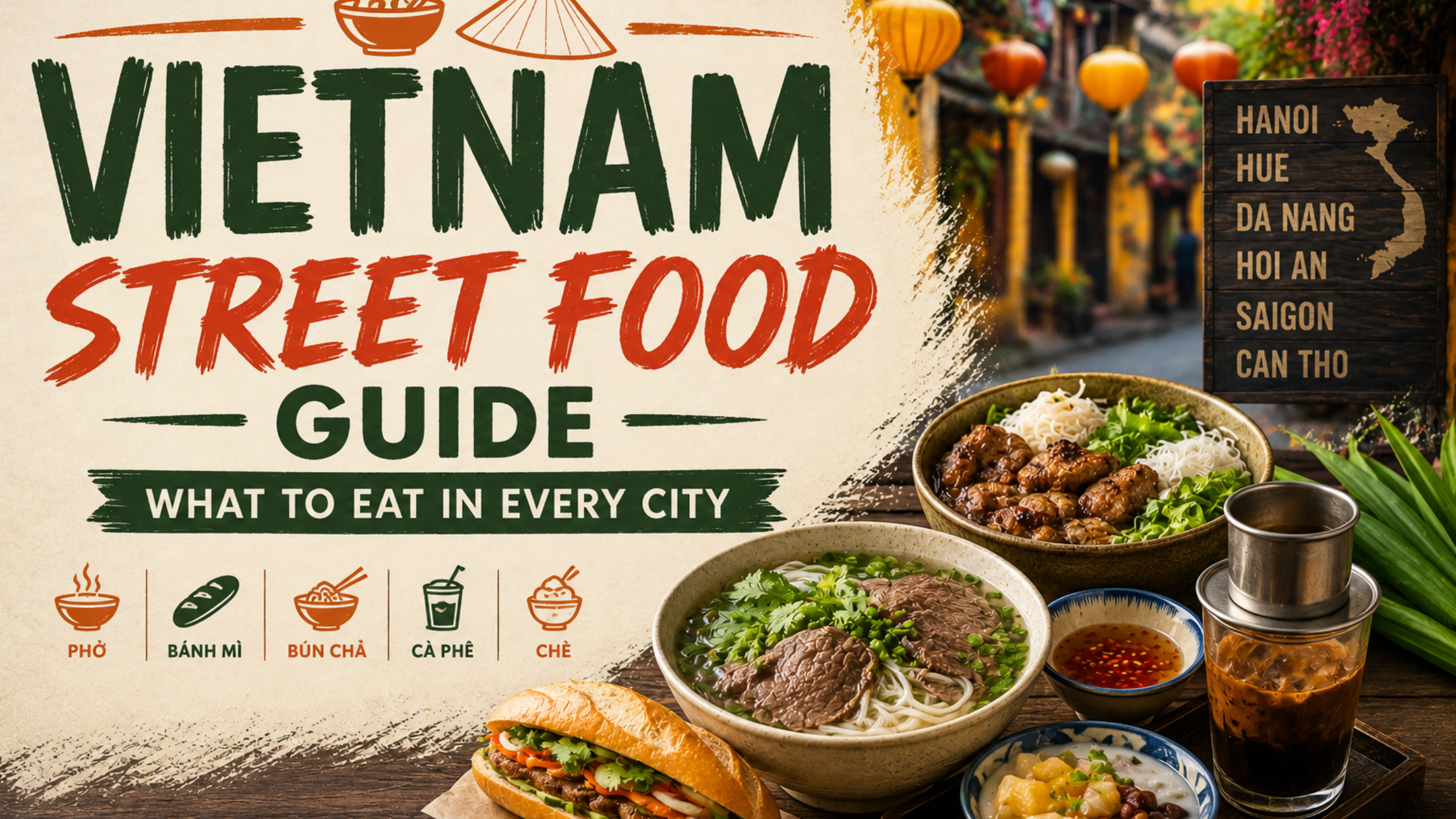
Vietnam’s street food is one of the great culinary experiences of the world, and it varies dramatically from city to city. A bowl of pho in Hanoi tastes and looks completely different from a bowl eaten in Ho Chi Minh City. The street food culture of Hoi An produces dishes found almost nowhere else in the country. This complete Vietnam street food guide covers exactly what to eat in every major city, helping you navigate the extraordinary diversity of Vietnamese food at street level.
Understanding Vietnam Street Food Culture
The foundation of Vietnam street food is the vendor who specializes in a single dish, sometimes a single preparation within that dish, perfected over decades. The pho stall that opens at 6 AM and closes when the broth runs out. The banh mi cart that sells only two varieties. The bun cha shop that serves nothing else from 11 AM to 2 PM. This specialization is why Vietnam street food achieves such depth of flavor and consistency, and why knowing what to order where is so important.
Hanoi Street Food: The Northern Capital
Pho (Pho Bo and Pho Ga)
Hanoi is the spiritual home of pho Vietnam, and the northern version is distinctly different from its southern counterpart: a clearer, more subtle broth with fewer garnishes and a more restrained flavor profile. Pho Thin at 13 Lo Duc and Pho Bat Dan at 49 Bat Dan are the most celebrated traditional Hanoi street food pho destinations.
Bun Cha
Bun Cha is the quintessential Hanoi lunch dish: grilled pork patties and belly in a light sweet-sour broth, served alongside cold vermicelli noodles and a generous plate of fresh herbs. Bun Cha Huong Lien on Le Van Huu gained international fame when Barack Obama and Anthony Bourdain dined there together in 2016.
Banh Cuon
Steamed rice rolls filled with minced pork and mushrooms, served with fried shallots and nuoc cham. Banh Cuon Gia Truyen at 14 Hang Ga is among the most respected traditional Hanoi street food spots for this delicate northern dish.
Bun Rieu
A crab-based noodle soup with tomato, tofu, and various pork additions, offering a flavor profile completely different from other Vietnamese noodle soups. Best found in Hanoi’s Old Quarter at traditional morning food stalls.
Egg Coffee (Ca Phe Trung)
Not a food but an essential Hanoi street food beverage: strong Vietnamese coffee topped with a thick, creamy egg yolk and condensed milk foam. Cafe Giang at 39 Nguyen Huu Huan is the original and most celebrated address.
Where to Eat Hanoi Street Food
Bia Hoi Corner (intersection of Ta Hien and Luong Ngoc Quyen) for beer and snacks in the evenings. The Old Quarter’s Hang Be and Ma May streets for diverse morning food stalls. Dong Xuan Market’s surrounding streets for local daytime eating.
Saigon Street Food: Ho Chi Minh City
The Saigon street food scene reflects the south’s Chinese influences, sweeter flavor profiles, and greater abundance of fresh garnishes compared to the north.
Com Tam (Broken Rice)
Saigon street food revolves heavily around com tam, a plate of broken rice served with grilled pork ribs, fried egg, pickled vegetables, and fish sauce. Available at dedicated com tam shops from early morning. Com Tam Bi Suon Cha at 84 Dang Van Ngu is a beloved institution.
Hu Tieu
A clear, light pork bone noodle soup with Chinese roots, featuring thin translucent noodles and multiple toppings including minced pork, shrimp, and quail eggs. Hu Tieu Nam Vang is the most common style found throughout southern street food culture.
Banh Mi Saigon
The Saigon banh mi tends to be richer than the Hoi An version, with more pate, more mayonnaise, and a wider variety of fillings. Banh Mi Huynh Hoa at 26 Thi Sach is perhaps the most famous destination for this best Vietnamese street food specialty in the south.
Bun Thit Nuong
Cold rice vermicelli served with grilled marinated pork, crushed peanuts, crispy spring rolls, and fresh herbs, dressed with nuoc cham. This is a quintessential Saigon street food dish available throughout the city.
Where to Eat Saigon Street Food
Ben Thanh Market and surrounding streets for the most concentrated variety. Nguyen Trai Street in District 5 (Cholon) for the best Chinese-influenced southern food. District 4 for the most authentic local eating away from tourist areas.
Hoi An Street Food: The Ancient Town’s Unique Specialties
Hoi An possesses its own unique street food identity, with several dishes found only in this ancient trading port.
Cao Lau
Thick, slightly chewy noodles (made with Hoi An well water and lye ash) served with roasted pork, rice crackers, and herbs. Genuinely unique to Hoi An and one of the most important dishes in this Vietnam street food guide. Available at most traditional restaurants in the Ancient Town.
White Rose Dumplings (Banh Bao Vac)
Delicate shrimp-filled rice paper dumplings folded to resemble white roses, topped with crispy shallots. Only one family in Hoi An is said to make the authentic rice paper for this dish.
Banh Mi Phuong
The most famous banh mi in Vietnam, a crispy baguette with a remarkable filling combination. The queue outside the small shop at 2B Phan Chau Trinh moves quickly, and the result justifies every wait.
Hoi An Night Market
The night market at Nguyen Hoang Street along the river offers a concentrated selection of Hoi An specialties including Cao Lau, White Rose, and various grilled meats from 6 PM onward.
Hue Street Food: Imperial City Specialties
Hue’s cuisine is considered the most complex and spiced of the best Vietnamese street food traditions, reflecting the refined imperial cooking culture of the former royal capital.
Bun Bo Hue
Vietnam’s spiciest major noodle soup, made with lemongrass-infused beef and pork broth, thick round noodles, sliced beef, and pork knuckle. Essential Hue street food found at dedicated shops throughout the city, particularly along the south bank of the Perfume River.
Banh Khoai
Hue’s version of the sizzling crepe (banh xeo), smaller and crispier than the southern version, served with a unique peanut and sesame dipping sauce rather than nuoc cham.
Com Hen (Baby Clam Rice)
Tiny river clams served over cold rice with dozens of accompaniments including pork rinds, pickled vegetables, star fruit, and spicy shrimp paste. This is one of the most complex and uniquely Hue dishes in this entire Vietnam street food guide, best tried at Hem 18 Trung Hung Vuong.
Da Nang Street Food
Da Nang street food draws from both the northern and central Vietnamese traditions while developing its own specialties.
Mi Quang
Wide, turmeric-tinged noodles served with minimal broth, shrimp, pork, peanuts, and sesame rice crackers. Originally from the Quang Nam province surrounding Da Nang, Mi Quang is the most distinctive regional noodle dish in central Vietnam.
Banh Trang Cuon Thit Heo
Rice paper rolls with boiled pork, shrimp, herbs, and vegetables, assembled at the table by the diner. A social and interactive best Vietnamese street food experience available throughout Da Nang.
Vietnam Street Food: City by City Quick Reference
| City | Must-Try Street Food |
|---|---|
| Hanoi | Pho Bo, Bun Cha, Banh Cuon, Egg Coffee |
| Hue | Bun Bo Hue, Banh Khoai, Com Hen |
| Hoi An | Cao Lau, White Rose, Banh Mi Phuong |
| Da Nang | Mi Quang, Banh Trang Cuon Thit Heo |
| Ho Chi Minh City | Com Tam, Hu Tieu, Banh Mi, Bun Thit Nuong |
Vietnam Street Food Safety Tips
Choose stalls with high turnover and freshly cooked food. Eat where locals eat rather than at stalls positioned primarily for tourists. Avoid cold dishes or garnishes that have been sitting out in direct sun. Carry hand sanitizer as handwashing facilities are limited at many stalls. Start with milder dishes if sensitive to spice, building toward the more intensely flavored Hue specialties.
Frequently Asked Questions
Q: What is the most famous Vietnamese street food?
Pho is the most internationally recognized, though banh mi rivals it globally. Within Vietnam, com tam in the south and bun cha in the north are equally celebrated staples of Vietnam street food culture.
Q: Is Hanoi or Saigon better for street food?
Both are exceptional for different reasons. Hanoi street food specializes in lighter, more subtle northern flavors. Saigon street food is richer, sweeter, and more diverse in its Chinese-influenced variety. Most Vietnam street food guide recommendations suggest trying both cities for a complete picture.
Q: Is Vietnamese street food safe?
Yes, generally, when basic hygiene practices are followed: choosing busy stalls, watching food being freshly prepared, and avoiding cold items sitting in the sun.
Q: What is the best street food city in Vietnam?
Hoi An consistently receives the highest praise from food travelers due to the unique dishes (Cao Lau, White Rose) found nowhere else in the country. Hanoi and Ho Chi Minh City both offer greater variety but less geographical uniqueness.